Pages

Showing posts with label holiness. Show all posts

Thursday, October 22, 2015

"Holiness Is Fitting For Your House"

Two Saints: St John Paul II and St Maria de la Purisima meet during the Pontiff's visit to Seville

There are so many things we could reflect on today, the feast of St John Paul II. Given recent events we could launch into his teaching on marriage and the family, his theology of the body, his reflections on the nature of sex and its theological significance. However, there is one thing missing from all the talking at the Synod and it is that theme which was central to the teachings of the Second Vatican Council, the reason for the Church, the motivation of the Church and the element which was to inspire the laity, clergy and religious to renew and was the basis of renewal: the universal call to holiness. 

The more I read St John Paul's writings on the nature of man the more I see him pointing in one direction - to sainthood - not as an unreachable ideal but as the ordinary state of a human being: anything less than that is not fully human. A theme the Synod should have looked at is the family as the seed-ground of holiness, the forum in which spouses and children learn authentic heroism. The Christian Marriage is all about heroism, hence Christ's seeing the need to make it a sacrament.

As a Pole John Paul loved his Saints, and I suppose that is another reason why God chose him to be Pope. His philosophy and theology were no mere academic ruminations, but the fruit of prayer, observation, listening and reflection. As he listened to the experiences of married couples he could see their joys and struggles in the context of faith and our human destiny, and he realised that it was all about holiness - the struggle for holiness, rejoicing in holiness, celebrating holiness, propagating holiness through word, example and, yes, sacrifice. It was the Pauline race for the laurels that never fade, it was carrying the disciple's cross to the summit, it was being transformed through vision of Mount Tabor accessed through prayer. 

St John Paul II encouraged us all to strive to be Saints, not to engage in a fantasy, but to finally open our eyes and see what Christ was getting at. "Can you not see?", he said to his disciples time and time again - not that they had to see that we are weak and need to wallow in that weakness and cry mercy as an excuse, but rather we see that we can be strong in faith: we need to get up off our beds, open our eyes, lose the baggage and open ourselves to the grace that transforms. Sadly, so many Christians do not see this. Comfortably wedged into the bare minimum or, worse, respectable Christianity, we have lost the ability to see. 

To celebrate St John Paul's feast well, we need only remember that where he has gone we are called also to follow. As the psalm says "Holiness is fitting for your House, O Lord" and indeed it is: the Church is the House of the Lord and it is to filled with holy people, and if we are not holy yet, then we must strive to be, and support each other on that path. I am beginning to think that the greatest enemies of the Church are actually those within who discourage holiness, who tell people that they just fine as they are because God loves them. They are wrecking Christ's plan of salvation for all of us. Yes, we all fall, but we must get up if we are to have any chance. To be fully human is to be a Saint.

Happy feast day to you all.

St John Paul and Blessed Teresa of Calcutta

Thursday, August 20, 2015

Novena to St Genesius Day 4


Called to be Prophets

In an age of mediocrity the most prophetic are those who strive for excellence. We live in a time when excellence is promoted in so many areas of life, but yet when it comes to faith, to the Christian life, there isn't the same drive to achieve excellence, or more correctly, holiness. Many drift along, usually with the assistance of an unhealthy dose of presumption, thinking that we are okay just as we are because God loves us. However, the love of God, which we should never take for granted, ought to urge us to a greater commitment to the Christian way: as St Paul reminds us the love of God compels us, urges us out to live lives of virtue, heroic virtue. Christian prophets today are those who attest to this call to heroism. Discipleship is about imitating the Master and the Master tells to be perfect as our Heavenly Father is perfect.

NOVENA PRAYERS

Prayer to St Genesius

Holy St Genesius,
martyr for Christ,
by the grace of the Holy Spirit
through your acting 
you came to discover
the truth of the Christian faith.
In your first profession of that faith
you were baptized through the shedding 
of your blood,
offering your life for the praise and glory
of our Lord Jesus Christ. 
Pray for those who dedicate their lives
to the theatrical and cinematic arts.
Like you may they find the presence
of the Lord in their work 
and generously open their hearts
to his teaching,
living it in the midst of the challenges 
and demands of their calling.
In this novena, I remember most especially…., commending him/her to your care.

Let us pray: 
Eternal Father, in your love you call all men and women to come to know you and to share in your divine life. Through the intercession of your martyr, Genesius, who responded so generously to the grace of conversion, grant that the same grace may be given to those who as yet do not know you, and may be renewed in those who do. We ask this through Christ our Lord. Amen.


Prayer for healing through the intercession of St Genesius

Lord Jesus,
you took pity on the blind Bartimaeus
and healed him;
you raised Lazarus from the dead
and freed Mary Magdalen from seven
devils to count her among your disciples.
You made the blind see, the deaf hear,
the dumb speak, the lame walk,
you cleansed lepers and cast out demons.
You preached the Good News to the poor 
and bless those who are faithful to you.
Through the intercession of your 
faithful martyr, Genesius, 
grant your healing and consolation to the sick. 
Give them the strength to carry their Cross 
in union with you.
(We remember in particular _________.)
Help us to remain faithful to you in health 
and in suffering, conformed to your Cross; 
open our hearts to your will 
so your grace may transform our lives. 

Saturday, January 31, 2015

A Father Of Saints


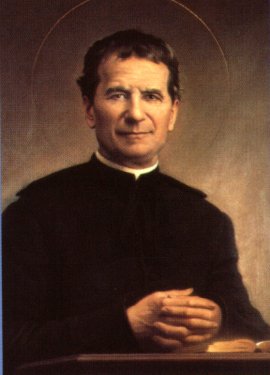
Given the year that is in it, I cannot let this feast pass today: the feast of St John Bosco. This year marks the two hundredth anniversary of his birth, and there are great celebrations taking place throughout the year in Turin, including a special exposition of the Shroud of Turin (I'm bringing a group, are you interested in joining us? See here for details).

There are so many wonderful things to reflect on in the life and mission of Don Bosco. At the heart of his life was his service to the young, and surely the sign of this great work are those children, educated by him or his spiritual sons and daughters, who are now numbered among the Saints and Beati of the Church. One of the great legacies Don Bosco has left us is that of promoting sanctity - there are many Salesian Saints, Beati, Venerables and Servants of God. 

The message is clear - when we reach out to help others in this life, we must also seek to help them reach out for that life which is destined for them in God's kingdom. Don Bosco was certainly one to say "all this and heaven too". Social activism, service of the poor, education and all those wonderful and important works of charity must never lose sight of the importance of leading souls to God, most especially those souls that are wounded or lost. Don Bosco's genius lay in the fact that he was able to do both.

Thursday, March 6, 2014

Not Your Average Saint


Is there such thing as an average Saint?  I suppose for many Saints are distant figures; people the Church has put on pedestals to intercede for us and to admire as those who achieve heroic virtue and sanctity in their lives on earth and now reap their reward in glory in heaven.  However, as I constantly remind my parishioners, they are not remote figures at all.  They were flesh and blood men and women like us, who faced many of the same difficulties that we do, but they often responded in ways that were more graced: graced, yes, but easier, no.  For them sin and temptation was as real as they are for us; the trials of life took their toll on them too.  Yet they abandoned themselves to God and strove hard to overcome these difficulties. 

In this Lenten season the prospect of Sainthood is put before all of us. The reason for this season is holiness - this is our annual retreat when we take stock of our lives in a more radical way and see that each one of us is called to heroic virtue, to great sanctity.  As Blessed John Paul II reminds us: holiness is God's plan for us, and the ordinary way of living for a Christian.  The trials and difficulties of life are the means through which we are sanctified, and we meet these with an ardent life of prayer, a radical renunciation of all that which hampers God's work in us and with a daily offering of ourselves to God so his will may be done in us. The road to holiness can often be a lonely road, but we do meet others along the way, some walking in the same direction, others trying to test us, and of course the ones whom we are meant to assist for Christ's sake, and for their own, so to perfect charity within us.

As we reflect on this we must also remember that those who have gone before us, the Saints, were all different and unique people, and sanctity manifests itself in different ways in each of them.  We have the obviously mystical and we have those who slogged their way through life with not such much as glimpse of a vision.  We have the gentle and patient, and then we have those who did not suffer fools gladly, like St Pio who was as famous for his gruff ways as his holiness.  We have people from every walk of life, and of every age; from those who lived long lives to those who lived very short ones. Many of these Saints lived in ordinary places doing apparently ordinary things and their heroism emerged there, others found themselves in the midst of turbulence, persecution and history's most traumatic moments and their holiness was formed in heroic deeds.  There is a Saint whose life mirrors yours.

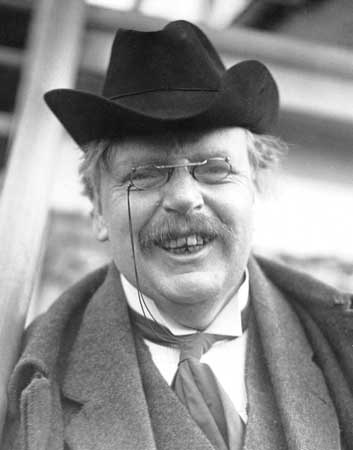
For your Lenten reading today, I suggest an article from The Catholic Herald on G. K. Chesterton. There is an investigation going on at the moment to see if a Cause should opened for him.  Many of us are convinced that he should be canonised, but sometimes Mother Church and her leaders tend to take the long road on making decisions on whether to open a Cause or not.  Some would suggest they are taking the scenic route on this one.  Prudence, I suppose.  This article is good because it explains that Chesterton does not fit the mould of a conventional Saint (maybe that is why things are progressing slowly).  But then again, as I have said, there is no such thing as conventional holiness. If I may be Chestertonian for moment: holiness is wild, untamed, radical, unconventional - it is by its very nature heroic, and there is nothing common or conventional about heroism. Holiness breaks moulds, not fit into them, nor even make them.  Each Saint is unique in his or her holiness, they emerge from the crowd not slip behind it.  And let's face it, no one would ever accuse Chesterton of slipping quietly behind the crowd, he was no shrinking violet.  And perhaps it is for that reason, for his sheer (and perhaps even shocking) unconventionality that he is well placed to remind us all that we too are called to be Saints. 

So, as Chesterton would say, this Lent, let us begin the great adventure.

Monday, February 17, 2014

A Witness to Hope In These Times

Fr Willie Doyle & World War I

It is a known spiritual fact that in an age of darkness and even persecution, God raises up holy men and women to inspire the Church and to remind us that Good Friday will always give way to Easter Sunday, even if Holy Saturday seems long and relentless.  Though it may seem so, God is not silent, he is always speaking to us in the "still, small voice": if we cannot hear him, we must listen more intently.  In such a time of difficulty, St Gregory the Great, for example, wrote his Dialogues to offer to the people of his time recent examples of holiness to inspire them and to remind them that the Holy Spirit is still at work, and though surrounded by infidelity and craziness, there were men and women who heeded God's invitation, embraced the Gospel and made it their way of life.

In these times, God is raising up holy men and women, more than ever before.  During the pontificate of Blessed John Paul II an unprecedented number of Saints and Blesseds were declared.  Though his critics see this as John Paul indulging a personal interest in Saints, it was not so.  For every Saint canonised there was a miracle, for the non-martyr Blesseds there were miracles: the pontificate of Blessed John Paul was truly an age of miracles in which God communicated to the Church that it was his will that these numerous Servants should be raised to the altars.  Why?  To inspire us and assure us that the Holy Spirit is as busy now as he was in the past.  Note that many of those John Paul, Benedict and now Francis raised to the altars are recent models of holiness.

Why these thoughts?  Well, in the midst of our current difficulties, recent models of holiness are being raised up to help and inspire us, to encourage us, to keep the fire of hope burning in our hearts.  Over the weekend I read a new, short biography of one of these recent models of holiness: a new CTS pamphlet on Fr Willie Doyle.  Now, if you read this blog frequently you know I have mentioned Fr Willie a number of times and I have expressed my admiration of him.  That admiration is growing, particularly as I read more of his writings, as I read more of his war letters and diaries.

This little pamphlet is a very accessible work and I recommend it highly as an excellent introduction to Fr Willie's life.  In essence it consists of two parts, intermingled: there is the biography written by the author, K. V. Turley, which gives the bare facts of his life.  However it is the second part which is most valuable: extracts from Fr Willie's writings, and with respect to the author of the pamphlet, it is these which make the pamphlet such a little treasure.  Fr Willie was an extraordinary writer, one whose personality and spirituality jump out at you from the page.  Like St Teresa of Avila he emerges as a living and breathing person for the reader: to read his writings is to encounter him. 

What also emerges, quite unintended by Fr Willie, I'm sure, who sought to live a hidden life, is his tremendous sanctity. Reading his writings you are astonished by the work of grace in him and by the fruits of that grace.  Suffering the deprivations of the trenches, he fulfilled his priestly ministry as a military chaplain during the First World War in an extraordinarily heroic way, bringing joy to dying soldiers as he risked his own life to give them the Last Rites.  For any priests suffering in this time of trial, Fr Willie Doyle is an inspiration, a priest who reminds us that our priestly vocation truly comes to life in a dynamic way in the midst of persecution and suffering.  Fr Willie is certainly a witness to hope for us in these times: a witness for all Christians, but in particular for us priests.

As we in Ireland, and in other countries, face an uncertain future as, it seems, all hell has broken loose as anti-Christian elements have launched an all-out frontal attack, Fr Willie has much to teach us.  He threw himself into the battle of his time, relying on Christ.  He realised that the real battle is the one with ourselves, within, and if we fight that one, drawing on the grace God gives us, then the external battle will be seen as no more than a skirmish.   The victory within is the greater victory, and that victory will give us confidence to face the external battle and, in hope, know that there too we will be victorious, or rather Christ will be victorious.   So, as Julian of Norwich famously wrote: "All will be well, all manner of things will be well". Taking this as expression of hope, rather than a naive denial and delusion, we will keep our peace. 

The CTS pamphlet biography can be purchased online here. More information on Fr Willie's life can be be found at his website: www.fatherdoyle.com.   Please say a prayer than one day a Cause will be opened for Willie's beatification.  As you will discover the more you read about him, he is a great Saint, one who deserves to be venerated as such.  However, no Cause has been started, despite the fact that devotion to him is growing throughout the world.  

Tuesday, October 16, 2012

More Than A Sane Woman


Too often religious believers, and in particular the orthodox, are considered mad by their betters.  To accept the teaching of Christ as given, and to love the Church, are often seen as proof that there is something wrong or infantile about us.  Today's feast offers us a corrective to this presumption.

On one of my visits to Paray-le-Monial, I was speaking with one of the Visitation Sisters - we were discussing St Margaret Mary, whose feast it is today.  I asked if her body was incorrupt - it had been said in some quarters that it was, yet the "body" which lies in the chasse in the Visitation Chapel, is a wax model.

Most of her body, I was told decayed naturally: however some parts were found incorrupt.  "Which parts?" I asked.  "Well, for one her brain is incorrupt", the sister explained.  When I asked her why this organ was left intact the sister suggested that the Lord preserved it so it could be seen that Margaret Mary was not mad - her visions were authentic and not the effects of a physical defect.

It is an interesting theory, and examination of the visionary's brain did prove that it was the brain of a normal, healthy woman - so she was sane.  That is an interesting place to start.  But Margaret Mary was more than just a sane woman, she was a lover.  Indeed, as a symbol of this, her heart is also incorrupt.

Being in love with Christ and his Church explains why so many religious believers are so devoted.  Love can be a difficult to understand, and submitting to this love can seem like madness to those who approach religion and truth from a different direction.

Margaret Mary teaches us that, at the end of the day, we are called to love - to fall in love with God who loved us first.  That love of God is symbolised by the human Heart of Jesus Christ, pierced for us and on fire with love for us.   What we learn about the faith is meant to deepen our love - so this Year of Faith is one in which we lay firmer foundations for our love affair with God.  How we live and act is to be a response in love to God's love for us, and an essential element in this is obedience - obedience to God's will, his teaching and the path he has laid out for us.

So, why are the orthodox so dogged in their adherence to the teachings of the Church?  Well, I think love has a lot to do with it.

In other news, I have been asked by people from pro-life groups to post this video which challenges the pro-abortion lobby's argument that abortion is required to save the life of a mother.  Glad to oblige. 

Just to keep you updated: there will be protest in Belfast on Thursday organised by Precious Life, from 10am to 4pm, on Great Victoria Street.  For more information contact: info@preciouslife.com, or 048 902 78484 (from the Republic)/ 028 902 78484 (from the UK).


Thursday, July 12, 2012

The Feast of Marriage


In Carmel today we celebrate the feast of Blesseds Louis and Zelie Martin, the parents of St Therese of the Child Jesus.  In doing so we also celebrate the sacrament of marriage within which these two holy people were sanctified.  Indeed today was chosen as their feast day because it is their wedding anniversary. 

If ever there was a time to celebrate marriage and holy married couples it is these difficult times.  Given the attack on marriage and the legitimacy being according irregular relationship be they heterosexual or homosexual, the example and intercession of a married couple provides us with an antidote and a sign of hope.

When I was doing parish work in New York as a seminarian I befriended a wonderful married couple, Nancy and Jim - they were involved in Marriage Encounter.  They taught me a lot about the sacrament of marriage, and Nancy was always at pains to remind us, and quite rightly too, that the sacrament is lifelong - it isn't a flash of grace after the vows which is never repeated - grace is continually being poured on the couple - each being a minister of grace for the other.  That grace is given to help the couple live as one body and bring forth new life into the world.  It is there to sanctify the couple, as we see in Louis and Zelie, and to make them witnesses to Christ's love for the Church through the sacred bond which unites them.

This is a wonderful theology - a wonderful reality.  This is what we in the Church need to begin to teach again. It is for this reason that marriage is a relationship like no other: it is the only relationship which is a sacrament.   In no other relationship is grace poured out as in that of husband and wife. It goes without saying I am speaking of marriages which are conducted in Church before a priest or deacon.

Blesseds Louis and Zelie were beatified because they were sanctified through their marriage - not because they are the parents of St Therese.  In fact if we look at the writings of St Therese we see that she came to love and live her faith thanks to the teaching and example of her holy parents.  It was Louis and Zelie who are partly responsible for the great holiness of their daughter.  Holy parents can bring Saints into the world (not all the time, some Saintly parents had the cross of irreligious children).  We see other holy parents who have holy offspring - the parents of L'Arche founder Jean Vanier are being considered for beatification and their holiness had an enormous influence on Jean whom many consider to be a saint himself.

Today, then, let us commend to the intercession of Blesseds Louis and Zelie all our married couples, may the Lord sustain them in the sacrament of their marriage.  We pray for those in irregular relationships, that they may be reconciled. We pray for those trying to resist the redefinition of marriage, may this Holy Couple obtain from the Lord the grace to sustain them, give them courage and wisdom, and the skills to touch the hearts of our legislators.

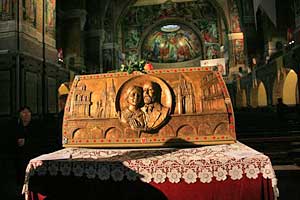
Reliquary containing the bodies of Blesseds Louis and Zelie

UPDATE:

Christopher McCamley over at the Catholicus blog has the collect and reading from the Office of Readings for today's feast.  The reading may be of interest to you, it is taken from Blessed Zelie's letters.


Tuesday, June 26, 2012

Prophet Of Holiness


Today is the feast of St Josemaria Escriva, the founder of Opus Dei, so happy feast day to all the members of the Prelature and devotees of the Saint.  

One of the great benefits of the Internet is that you can see many of our holy people in the flesh so to speak, and this is true of St Josemaria.  There are a number of YouTube videos of him giving talks and engaging with people.  Contrary to the "black legend" which has been constructed around him, St Josemaria can be seen to be a humble, holy, funny, intelligent and engaging person.  I am posting one of the videos at the end of this post, so if you have time watch it. I love the joke about the Andalusian gypsies. 

Opus Dei have had a lot of bad press over the years.  About twenty years ago RTE did a hatchet job on the association and that has poisoned Opus Dei in the eyes of many Irish people ever since. I had an interesting conversation with a parishioner a few weeks ago and Josemaria came up in the conversation - the reaction was not good.  

Here is another situation where, thanks to the media, the truth about the Church and a Church organisation has been distorted so as to turn people against it.  I  think, looking back at what happened, I see the media in Ireland sharpening its teeth on Opus Dei so as to begin its assault on the Church.  The success it had in demonising the organisation gave it confidence to go for the "mother ship".  In a sense Opus Dei has become the modern Jesuits.  In history whenever a government or monarch was going to persecute the Church, they threw out the Jesuits or killed them - whichever was quicker.  It seems the modern secularist demonises Opus Dei and then starts on the Church.  I suppose that is a compliment to the Prelature - a sign that they may well be a leaven and a powerful witness to the Church.

St Josemaria was indeed a dangerous man - hence many feel the need to demonise him.  He had a very dangerous message - a revolutionary message: one he found as he spent hidden hours reading a dangerous book.  His organisation continues to spread this dangerous idea, and his sons and daughters dedicate their lives to it, are totally committed to it, put everything else in the service of it.  That idea is.....that all people are called to be holy, and that that holiness can be achieved, not just in a convent or monastery, or as a priest or hermit, but in the ordinary events of ordinary lives and through the ordinary work of one's day. 

To a world immersed in mediocrity and pleasure, that idea is very dangerous.  It is dangerous because it blows out of the water once and for all the accusation that the standards set by Christ and upheld by his Church are unreachable.  They are reachable, so none of us have the excuse of lying back on our laurels and saying "It is impossible, just stay as you are, sure God loves you anyway".  St Josemaria tells us that we have to jump out of bed in the morning, on to our knees and to spend that day in humble service of God and our neighbour, open to the work of the Holy Spirit who seeks to sanctify us and prepare us for heaven.  The dangerous book, by the way was the Bible - in its original integrity and not reinterpreted for our comfortable times.

One of the accusations made against Opus Dei was that they are secretive. I have two responses to that: the first is indignation.  These accusations are coming from people and organisations which can be deeply secretive themselves.  Is there any other organisation more secretive than the media?  When you start looking at what goes on behind closed doors in secular newspapers and media networks you get an eye opener - as we saw in the case of Fr Kevin Reynolds.  And as for infiltration - the connections between media and government and various other influential organisations here in Ireland are astounding.  There is small, tight circle in Ireland and you are either in or out, and if you are in, then you're "in".   There are also other interesting connections and relationships which are kept fairly quiet: one concerns certain political people and the former Soviet Union.  And as for the Freemasons, well we don't hear much about them in modern Ireland: is this for a reason?  Has anyone noticed that their HQ is beside our parliament building? 

My second response concerns the reality of the "secretiveness" of Opus Dei: they are ordinary people living and working in the world, living out their spirituality and striving for holiness in a hidden way ("hidden with Christ in God" as St Paul describes it).  They do not trumpet their good works for all to see - they just want to be left alone to love God and serve their neighbour.  They do not proclaim that they are members for a number of reasons, one I'm sure is because they have been demonised so much by the media it's best not to draw attention to themselves.  After all, any group that has been unjustly demonised tends to be careful.  If the media turned on stamp collectors as they did on Opus Dei, I think many of them would go underground.

That said, people have had negative experiences, and that happens even in the best organisations and with the holiest people.  No one and no organisation is perfect - we strive for perfection, but that doesn't mean we have it yet.  It is also true that every organisation has people who take things to extremes, can be tough, too zealous, and yes, can be uncharitable and unChristian: welcome to the sinners's club (aka the Catholic Church).  An important part of the spiritual life is enduring difficult and demanding people: they are called "saint-makers" and Opus Dei has its share of them too!

St Josemaria took Christ's message to heart: "Be holy as your heavenly Father is holy", and he took Jesus at his word when, in his Priestly Prayer in St John's Gospel, he prayed that we would achieve that holiness.  Christ will help us, and so in him we truly become children of our Eternal Father: saints.  St Josemaria was called to proclaim that message long before Vatican II would reiterate it in its teaching.  We don't have to be members of Opus Dei to live that message - it is presumed by the Church that we are striving to do so since the way of holiness is, as our Gospel tells us today, the narrow path to heaven. 

St Josemaria was sent to wake us up to this.  He often saw himself only as a little donkey, but I think he is more like an alarm clock which goes off on a fine and sunny morning, urging us out of bed to embrace the heroic minute - the heroic life.  To those who see the joy of a new day, he is a welcome witness; to those who want to turn over in the bed, pull the covers over their heads and pretend the world does not exist because they are too tired to be bothered with it, then he is an nuisance.  Thank God for that Nuisance!

Tuesday, January 10, 2012

The World Is About To End....Yippee!!!!


That headline may lack sensitivity in these troublesome times as people fret and worry over the Mayan prophecy which claims that the world is going to end at midnight on the 21st December 2012.  Indeed.

I was watching part of a documentary the other evening on Channel 4 which dealt with the prophecy and how people were getting ready for the end of the world.  One gentleman is selling bunkers and apparently they are going like hotcakes - there's an enterprising man for you.  Others are teaching courses on survival techniques for a post-apocalyptic planet.  I was scratching my head: how in the name of all that is holy can anyone escape the end?  All the survival techniques in the world are no good when this planet pops over the edge of oblivion.

Do I believe the Mayan prophecy?  Well no, I don't - I think the above cartoon may have an element of truth to it, and so too the argument that the prophecy fits into a Mayan world view which is limited to a certain cycle, so the end has to happen at that date in order to bring the cycle of cycles to a perfect end.  The prophecy may be more about a mythical symmetry than anything else.

Could the world end at the midnight 21st December 2012?  Yes, of course it could.  And it could end tomorrow at 1.25pm as we are all tucking into our ham salad sandwiches and eyeing up the pastry for the next course - there may not be a next course. 

Jesus tells us two things in the Gospel about the end, and both of them nullify the hysteria over the Mayan prophecy.  First - we will not know the day or the hour of the second coming of the Lord - which will be the end: so bang goes the prophecy.  Secondly, we as Christians must live each day as our last - so we must expect the end at any moment, and one moment in the future will be our last.  That spirituality of the ever-present last day is a powerful spur to living a life of virtue. 

And how do we, as Christians, respond to the coming of the end? We rejoice for, as we are told in Sacred Scripture, when we see the Lord appear on the clouds, we lift our heads high, for our liberation is at hand.  We do not run around buying bunkers or learning how to survive on a wasted planet, we live holy lives and learn how to live as Saints in this world so we will live like Saints in the next. 

Thursday, September 1, 2011

The Way To Go


Fr Mark over at Vultus Christi blog has a lovely post on Blessed Ildefonso Schuster, former Cardinal Archbishop of Milan.  During our pilgrimage to the Exposition of the Holy Shroud of Turin last year, we visited the duomo in Milan and paid our respects at the tomb of Blessed Ildefonso.  Yesterday was the Blessed Cardinal's feast day and as a Benedictine, Fr Mark's new congregation were celebrating the man, his life and his example. 

I was struck by one of the Cardinal's sayings, one which is very appropriate for these times and for priests in parish ministry.  He speaks about the importance of holiness.  Too often those of us in parishes forget about the first item on our ministerial agenda - to form the people in holiness and prepare them for heaven.  We have so many other pressing concerns - running the parish plant, administering the sacraments, visitation, getting involved in various local activities, and we tend to run around like Marthas all day, every day.  And yet, as the Lord reminds us, "only one thing is necessary": holiness.   Here is what Blessed Ildefonso has to say (from a talk he gave to his seminarians just a few days before he died): 
"I have no memento to give you apart from an invitation to holiness. It would seem that people are no longer convinced by our preaching; but faced with holiness, they still believe, they still fall to their knees and pray. People seem to live ignorant of supernatural realities, indifferent to the problems of salvation. But when an authentic saint, living or dead passes by, all run to be there. Do not forget that the devil is not afraid of our [parish] sports fields and of our movie halls: he is afraid, on the other hand, of our holiness."
Good advice.  If there is one thing we need to do now, especially here in Ireland, and that is to put the fear of God into the devil and his minions. 

I am reminded of that joke which Fr Z posted on his blog: the one about the various religious and the parish priest during Vespers when the light went out: 
During a Eucharistic Congress, a number of priests from different orders are gathered in a church for Vespers. While they are praying, a fuse blows and all the lights went out.
The Benedictines continue praying from memory, without missing a beat.
The Jesuits begin to discuss whether the blown fuse means they are dispensed from the obligation to pray Vespers.
The Franciscans compose a song of praise for God’s gift of darkness.
The Dominicans revisit their ongoing debate on light as a signification of the transmission of divine knowledge.
The Carmelites fall into silence and slow, steady breathing.
The parish priest, who is hosting the others, walks down the stairs to the basement and replaces the fuse.
I love it, and I get the point.  But perhaps it might have been no harm for the parish priest to sit in the darkness for a while and keep praying, and then replace the fuse.

*  *  *

PS  For those of you interested in relics, Blessed Ildefonso's body was found completely incorrupt when it was exhumed as part of the beatification process.  Below is a photograph of his face as found when exhumed. 

Thursday, May 5, 2011

Blessed Edmund Ignatius Rice


With all the trouble in recent years with regard to child abuse, I fear today's feast may not be celebrated by many in Ireland today.  Today is the memoria of Blessed Edmund Ignatius Rice, founder of the Christian Brothers and the Presentation Brothers. 

Blessed Edmund was a remarkable man, a man of deep humility, prayer, service and love. The fact that his congregations have been implicated in the abuse crisis is a tragedy for their founder who abhorred the use of violence and sought, like Don Bosco after him, to teach the boys in his care through love.  He told his brothers that they must not act in anger with the boys that misbehave, but to win their hearts. The infamous "leather", associated with the Christian Brothers, came in after his death - he forbade corporal punishment.  He was not the first founder whose wishes were ignored by his spiritual children after his death.

Blessed Edmund suffered a great deal in his life.  His lost his wife in tragic circumstances, his daughter was handicapped, though she was a joy to him throughout his life.  He saw his congregation split by a bishop who wanted control over the brothers based in Cork.  Towards the end of his life he was also treated badly by some members of his congregation, as are many founders. 

Today, the greater tragedy is that his life's work seems to have not only been lost, but sullied and demeaned, and his congregations are much despised.  Yet there were many good and holy Christian and Presentation Brothers, very much sons of Blessed Edmund.  We can only hope that, with the passage of time, the full truth will emerge and we Irish might one day be proud again of this holy, selfless and loving man who sought to serve the young and prepare them not only for life, but also for heaven.  We have an Irish Don Bosco here, pray the Lord that one day we will realise it.

Here is a photograph of his tomb in Waterford, not really mad about it, touch of the space capsule or even tupperware about it. Actually, to be honest, I hate it......  Poor Blessed Edmund!

Tuesday, December 14, 2010

Juan de la Cruz


Today the Carmelite Order celebrates the Solemnity of St John the Cross, co-reformer with St Teresa, and Doctor of the Church.  St John is famous for his Dark Night of the Soul, and this has coloured many people's view of him.  I remember talking to a religious about him but the sister was not too keen to engage: "He's very dark", she said, "All Dark Night".   I suppose I could not blame her, when a theologian is taught as if he is a one trick pony, the richness of his theological teaching is not apparent or well known.  John is much more than the Dark Night: he is also the Living Flame of Love and the beautifully amorous Spiritual Canticle.  He has not been taught well.  If we look at his biggest fan, for example - St Therese of Lisieux, we realise there is more to him than misery.

If you are looking for a good introduction to St John, to ease you into his work, go to Ralph Martin.  He is the author of that wonderful synthesis of the Mystical way, The Fulfilment of All Desire.  Ralph gets St John, and sees the magnificence of his teaching.  During my retreat this year I used a series of Ralph's CDs on St John's theology as my talks and they were a revelation.  Having read St John, Ralph brought new insights and a freshness.  His basic understanding of St John - which is on the ball, is that he plots out the various steps of the spiritual life to help those who want to begin the journey to perfection here and now.  It is a journey, Ralph explains, which we will all have to do either here on earth or, if we are lucky enough to get there - in Purgatory.   The teaching on the two nights (Dark Night) - the night of the senses and the night of the spirit, are part of the journey where God purifies human desires and the soul, and so draw the person closer to union with him. 

Of course all the talk about St John centres on his mystical theology, but what was he like?  Many see him as a remote figure, very serious and distant: a man living on another plane, unable to identify with the ordinary person and their struggles, a mystic far above the ordinariness of life.  Well, nothing could be further from the truth.  Yes, John was quiet and serious, and St Teresa of Avila, who saw his qualities, also saw his faults, the strain of remoteness in his character.  In her inimitable way she worked on him to bring out that beautiful soul. John was sensitive, he loved deeply, and so, I think, he may have taken shelter in his quiet nature.  Gifted with many insights, he took life and faith seriously, and he was hard on himself.  Teresa brought out his humanity, and she was successful.  John was one of those people whom, when you met them, touch your soul and inspire love.  His gentleness and simplicity impress.

Throughout his life, he inspired great loyalty - the sisters of the reform loved him to bits, even if they found him a hard taskmaster at times.   When he was in prison, St Teresa's heart was breaking, and her sisters were praying day and night for his release.  When he finally escaped, it was Discalced sisters who took him in, hid him and nursed him back to health.  This experience would lead to his greatest works, which have allowed us a glimpse into his beautiful soul.

Reading St John, he is very different from St Teresa whose writing reveals her distinctive and lively voice: her work is all personality.  John's is more sedate, but just as powerful.  He is a great teacher, an understanding one and as he explains the mystical way, he does so using images to help us understand, repeating himself a great deal so we get the message. He is all heart as he tries to gently lead the soul on the path of holiness to union with God.  No wonder little St Therese fell in love with him: he was, in fact, the one writer she could identify with - it was his teaching which helped her understand where she was, and proved to be a great consolation in her trial of faith.  Another great saint who found St John's writings to be a great help in life was Pope John Paul II who wrote his doctoral thesis on St John of the Cross's teaching on faith.  In these days as many struggle faith, and many are looking for God, St John points us to the path which leads into the Heart of Christ to find therein, the invitation to a union of souls.

Wednesday, November 3, 2010

St Malachy Triduum Day Three: Feast Day

Given that today is St Malachy's feast day, and as we bring our Triduum to an end, perhaps a word or two on friendship.  Malachy and Bernard were dear friends: two holy men in love with God, they recognised in each other a soul mate and companion on the path to perfection.  Each sought to help the other to sainthood, and as they both attained it through mutual assistance, it is only right that their relics should lie together, intermingled.   I have spoken about friendship before on this blog and how same sex friendship is now taken to be homosexual relationships.  So far Malachy and Bernard have escaped the revisionists of the gay movement, and I hope it stays that way because the example of their friendship is one we can learn from.

The friendship they shared had many dimensions. It was personal - two human persons who liked each other, had a lot in common, and so enjoyed each other's company.  The fact that they were Saints does not mean that this human dimension should be excluded from their lives.  A second dimension was their common vision - their desire for the vision of God.  They often spoke about God, and together reflected on Him and his love for mankind.  Looking in hope towards the beatific vision, they taught each other about the Lord while living in his presence.  In this way, almost like a sacrament, they brought the presence of the Lord to the other.

Thirdly, they were men with a common purpose: reform.  They helped each other, encouraged each other, and no doubt consoled each other as they worked long hours and years in the Lord's vineyard, seeking to help the renewal of the Church.  Soul mates, they knew how to salve each other's wounds caused by enemies, misunderstandings, failures and weariness.   Fourthly, they spurred each other on towards holiness, as did St Basil and St Gregory.  Realising that they were send to each other to help form the other in the ways of sanctity, they corrected each other, advised each other in love, so they would not be distracted from the destination which lay ahead.

Finally, their friendship is a symbol of the communion which is to exist between the disciples of Christ.  As a married couple reveal, in their sacramental marriage, the love of God for his people, and the communion which exists in that love: friends reveal, through the union of their love, that love and communion which is particular to the Mystical Body of Christ.  As Malachy and Bernard loved each other, so we too should love one other and help one another on the path to holiness.


Happy Feast Day


Novena Prayer to St Malachy

Glorious Saint Malachy,
ardent yet gentle shepherd of God’s people,
we come before you seeking your
intercession and protection
in this time of trial.

Malachy, angel of peace,
who brought those in conflict
to be reconciled
in the name of Christ,
grant lasting peace and reconciliation
to our country.

Mighty pillar of the Church,
who banished error
by the truth of your preaching,
obtain for each of us the grace
of sincere repentance and renewal
that we may serve the Lord in holiness
all our days.

Most fatherly Archbishop of Armagh,
enkindle the hearts of bishops and priests
that, aided by your patronage and example,
they may labour to form a holy people
            strong in faith
            constant in prayer
            abounding in charity
            devoted to the Sacraments
            and loyal to the See of Peter.

O saint rich in mercy and compassion,
look upon all who are suffering or in need
and obtain for them support, healing and hope.

St Malachy, ablaze with heavenly fire,
be a light to guide us on our pilgrim way
to the Kingdom of Heaven.
There may we be united with you
in singing the praises of God
for ever and ever.
Amen.

SS Malachy and Bernard, pray for us.