Pages

Showing posts with label St Charles of Mount Argus. Show all posts

Monday, January 5, 2015

A Modest Proposal For Priests


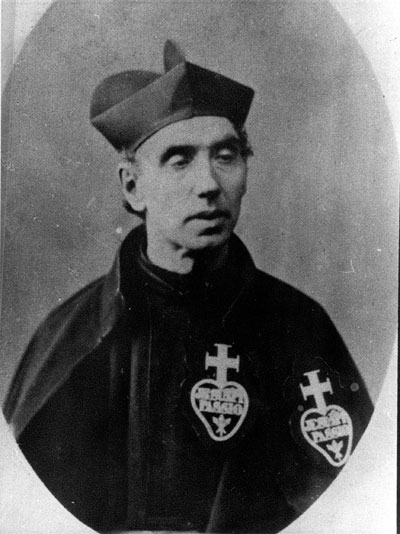
Today is the feast of St Charles of Mount Argus, Ireland's most recent Saint (and only the fifth Irish Saint to be canonised, and only the second since the Council of Trent - I call him Irish, even though he was Dutch because he became "more Irish than the Irish themselves"). I have blogged on St Charles before, so I am not going to give a biography. However I would like to reflect for a moment on a possibility, what I might call, after Swift, a modest proposal.

I believe that St Charles might well be an ideal candidate for Patron Saint of the Irish Clergy. Why do I say that? Surely, you might ask, priests already have a patron in St Jean-Marie Vianney. Yes, we do, the holy Cure of Ars is the universal patron of all priests. However, following the example of our English brothers, we could also have a national patron. St Thomas a Becket is the patron saint of the English clergy, his heroism in defence of the Church and the faith is offered to the priests of England as a model for their priesthood.

In a similar way St Charles could be offered to us as our patron. His ministry was one of humble service to the people of Dublin and beyond. Living his priestly vocation in simplicity and selflessness he was renowned for his offering of Holy Mass which was nothing short of mystical - he celebrated Mass like St Pio of Pietrelcina. He spent hours in the confessional, gently guiding souls, and he spent most of his day blessing the sick and the poor who came to him. Prayer was at the heart of his life and he nurtured a life of loving fraternity with the members of his community. Devoted to the Passion of the Lord he carried his crosses with courage and patience, and his deep devotion to Our Lady gave him an ever more loving heart and tender disposition. Such virtues are worth venerating and living in the priesthood.

But why, some might ask, should Charles of Mount Argus, a Dutchman and a religious be offered as a patron for Irish priests? Surely an Irishman would be better and most importantly a secular priest. Why not St Oliver Plunkett? And why not? St Oliver was a priest of my diocese, one who, like St Thomas a Becket was martyred for the faith and his fidelity to the See of Peter. However, I see providence in the canonisation of St Charles: he was raised up at the very time the priesthood in Ireland was torn apart, demoralised and disgraced after the dreadful revelations of child abuse. This is one of the reasons, I think, his glorification went unnoticed by many - we were all so caught up in the awful events that were unfolding that other Church events did not seem to register. Yet, as I noted at the time, St Charles was raised up in our midst. Perhaps this was a kairos moment, a sign from God to the priests to our land at a moment of profound suffering for many.

Another reason is that St Charles is the most modern of our priestly Saints and his ministry was carried out in very much the same way as many of us minister today. His priestly life, which we know in detail, was ordinary - there were no great dramatic events as in the life of St Oliver. He lived out his priestly ministry quietly enough, his heroism emerging from his daily generosity to God and the people in his care. This is like so many of our priests in Ireland: hardworking, simple men who get up early in the morning, work throughout the day, most of it hidden work, unknown even by many of their parishioners, and then falling into bed often very late. It is a life that can wear a man down if he is not careful, if he does not set time aside for prayer, meals and recreation. St Charles's ordered life of prayer, meals, recreation and work can remind us secular priests that order and balance are vital for the priestly life. 

But why a religious? Well first of all a priest is a priest, and priestly life lived well, heroically well, is a model for priests regardless of the habit or cassock he wears. Besides, his spirituality of the Passion of the Lord, part of the charism of the Passionist Congregation, is one we priests need to nurture in our spiritual lives, after all we are reminded in the rite of ordination that we are to model our lives on the mystery of the Lord's cross. We need to remember that every day, especially when things get on top of us. We need to learn how to embrace the cross, become the Cyrenian, and find freedom rather than languish in chains. St Charles is a good teacher in this regard.

And why a foreigner? Well, God saw fit to send this holy Dutchman to our land to minister in our midst as he once sent a Roman Briton. There is providence in that, I think.

I suppose this may well be just another post, read by some and forgotten. If so, so be it. I am just sharing a few thoughts I've been reflecting on since St Charles was canonised in 2007. It would be nice if some took heed of it and went with the idea. But it would be great if people took note of it and got to know St Charles better and prayed to him. It would be brilliant if priests, Irish priests (and bishops, let us not forget our bishops), took note, get to know Charles and find in him a friend, teacher and intercessor.

Saturday, January 5, 2013

A Few Links


Happy feast day to you all: today is the feast of our newest Irish Saint - St Charles of Mount Argus, a Dutch Passionist who lived most of his priestly life in Ireland.  He is Ireland's Padre Pio - a man with various mystical gifts, among them healing and discernment, and a priest who went into ecstasy as he celebrated Mass.  He was canonised in 2007, and it is a shame that he is not more widely known, particularly in Ireland.   At the time of his canonisation, I saw his glorification as a gift to the priests of Ireland: a patron, model and intercessor at a time when the morale of priests is very low and when some may be tempted to leave.  He is also a marvellous example of devotion to the Holy Mass, to the Sacrament of Confession and his love and obedience to the Pope.  As some priests may be tempted to rebel, St Charles, in his humility and holiness, calls us all back to see the right path for priests to take in their ministry.

Thanks to all of you who sent best wishes for my father and included him in your prayers.  He is back home now recuperating.   The blockage which caused the problem has been cleared and a stent put it.  It is amazing that something as small as a stent can mean the difference between life and death.  Science and medicine have come a long way, thank God.  Dad's GP is keeping a close eye on him, as are my mother and the rest of the family.  Poor man, it will be like living under surveillance by MI6 for him.  But thanks be to God for his mercy, and thanks to you for your prayers: I will remember you at Mass for your kindness.

A lot of things have been happening since I last blogged, one of the most notable developments has been the granting of a church to the Ordinariate in the UK - what a wonderful gift.  They have been given the Church of Our Lady of the Assumption and St Gregory, Warwick Street, Soho, the former Portuguese embassy church, during the persecution that church was a lifeline for many London Catholics.  It is also very central, so that will be handy for the Ordinariate and for those who want to participate in the ceremonies and devotional life of the community.  The dedication of the Church is appropriate - Our Lady of course, but also St Gregory the Great - the Pope who sent St Augustine of Canterbury to England to begin the conversion of the south of England. 

The Ordinariate is doing well: a community of Anglican nuns have been received into the Church over the last few days - their community was an important one in the religious life of the Anglican Communion.  We wish them every blessing as they continue their religious in full communion with the Church.  They have just been established as a new congregation in the Church: the Sisters of the Blessed Virgin Mary.  I also see that the Ordinariate has been given the care of a parish in the diocese of Southwark - Precious Blood near London Bridge.  Things are moving at last.  It will be interesting to see how things develop as recent decisions in the Church of England alienate more and more members: the most recent is the decision to lift the ban on appointing practicing homosexuals as bishops.  Interestingly it is a decision that is being criticised by both conservatives and liberals.

An interesting article from LifeSiteNews to keep us informed as the campaign for life continues here in Ireland.  Time Magazine laments the inability of the pro-abortion lobby to keep up the momentum in pushing their cause - too many inroads are being made by the pro-life movement.  Thank God for that, but as someone said to me: millions of children are dying every year in abortion clinics and pro-abortion groups have the ears of government and access to public funds to finance their campaign.  We have a lot of work to do.  Here is an interesting article on how, despite medical evidence to the contrary, abortion groups still insist abortion is needed to save women's lives. 

And finally, Cardinal Piacenza, the Prefect of the Congregation for the Clergy, has written a letter to the mothers of priests and seminarians.  It is a beautiful piece of writing, so if you know a mother of a priest or seminarian, print it off and give it to them.

Thursday, January 5, 2012

A Gift To Priests


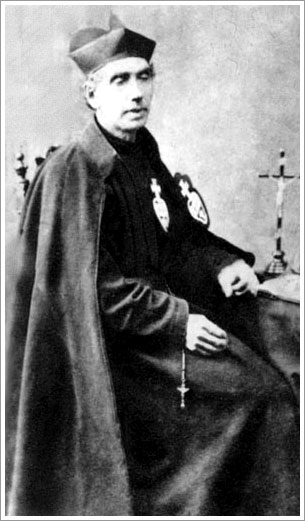
Today is the feast of St Charles of St Andrew, also known as St Charles of Mount Argus.   Canonised in 2007, he is the most recent "Irish" Saint - I put Irish in inverted commas because St Charles was actually Dutch, but became "more Irish than the Irish themselves" (as the saying goes) by spending most of his priestly ministry here among us.

Born Joannes Andreas Houben in Holland in 1821, he joined the Passionists in Belgium in 1845, and was professed as Br Charles of St Andrew in 1847.  He was ordained priest in 1850.  Sent to England two years later, he met with many Irish emigrants and ministered to them.  Fr Charles fell in love with the Irish: saw their strengths, but also their weakensses and difficulties - particularly their problem with alcohol.  In his ministering to them, he heard a call to go to Ireland and spend his life there.

That call was confirmed in 1857 when he was sent with other Passionists to found a new community in Dublin.    With the exception of two years, he would spend the rest of his life in Ireland, travelling around the country raising money to build St Paul's Retreat and its church at Mount Argus in Dublin, and ministering to those who came to the monastery.  

He quickly became known as Fr Charles of Mount Argus and he endeared himself to the faithful.   He was gifted with numerous charismatic gifts, among which were the gift of healing and discernment which revealed the heart of his mission: that of hearing confession and healing the sick.  Up to the day of his death, people made their way out to Mount Argus to be healed, to go to confession, and to attend his Mass during which he often fell into ecstasy.

Recognised as a Saint by many, he had his enemies - some of those who attended Mass in Mount Argus, for example, thought his Mass was too long, and so were forever complaining: his superior eventually had to stand by him at the altar and put pressure on him.  Whenever he entered a mystical ecstasy, his superior would shake him until the came out and continued the Mass.  It seems these people did not really appreciate the presence of a Saint or the manifestation of the mystical - unfortunately it is an attitude still to be found in Ireland: we have many "watch gazers" and "time keepers" at Mass on Sundays: the obvious sign of a serious need for renewal. 

Fr Charles was a victim to false allegations during his lifetime.  A man arrived one day at the monastery and asked the Saint to bless a barrel of water: Charles did so gladly.  However, the man bottled the water and sold it throughout Dublin city as Holy Water blessed by the Saint of Mount Argus.  Complaints flooded in to the Passionists, and even though Charles pleaded innocence, his superiors did not believe him and he was sent back to England in disgrace.  When the truth emerged two years later, he was rehabilitated and sent back to Ireland.

Charles died on the 5th January 1893 with a reputation for holiness.  His Cause was opened in 1935 and reached a successful conclusion on the 3rd June 2007 when Pope Benedict XVI canonised him.  Sadly, he is unknown by most Irish people, very little effort was made in the run up to his canonisation -  another opportunity missed by the Church in Ireland.  His tomb is in the Passionist Church in Mount Argus and is a wonderful place to go and pray in the presence of the sacred remains of a holy priest who followed Christ with deep fidelity.  It is worth a visit.

I believe that St Charles was given to Ireland as a gift, and indeed he is a gift to all priests.  In his life and virtues we see how a true Christian is to live, and for us priests we see what is most important in our vocation.  At the heart of St Charles's ministery, indeed his life as a priest, was the Mass, confession and prayer.   The Mass was the centre of his life - in his offering it we see another Padre Pio - indeed St Charles is Ireland's St Pio.  Like St Pio, his ministry in the confessional reminds us of the importance of that sacrament - a message we need to hear as many today abandon the sacrament.  In his healing ministry he always told those who came to him that true healing was to be found in confession.

This morning in Rathkenny we celebrated the Saint's feast, although, strangely, the new translation of the Missal (Veritas version) does not include the texts for his memoria. 

File:Father Charles of Mount Argus.jpg