Pages

Tuesday, May 7, 2013

Congratulations, Bishop-Elect!


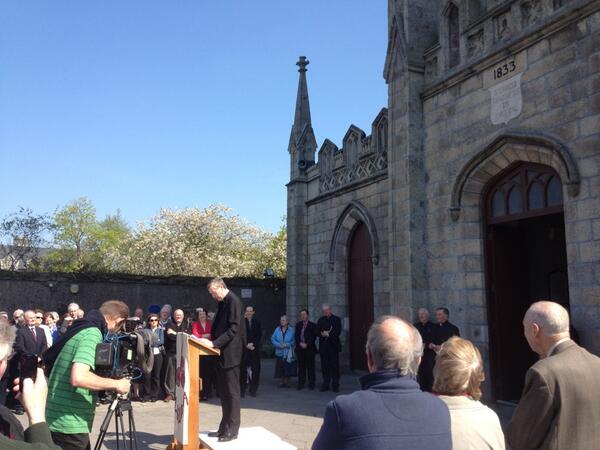
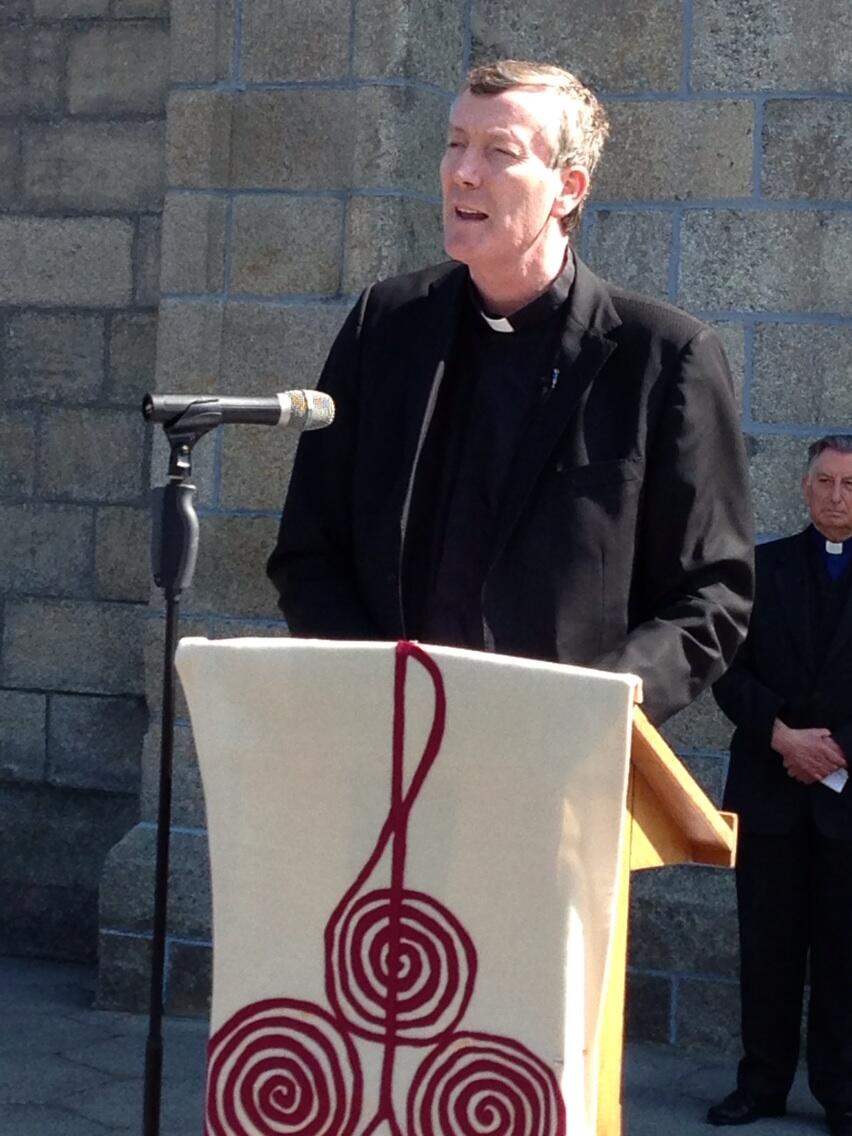
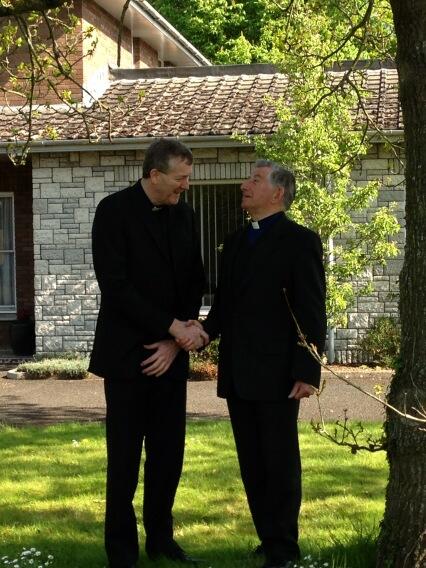
News has come through that my former Parish Priest and friend, Fr Denis Nulty, has been appointed Bishop of Kildare and Leighlin.   It has come as delightful news, and I can only wish Bishop-Elect Nulty every blessing and grace as he begins his episcopal ministry.  
 
Following my ordination, I was appointed to St Mary's, Drogheda, under the care of Fr Denis.  He was a great pastor to work with.  I found, and still find him, a great teacher in the way of parish ministry, a wonderful friend and great fun.  He was loved by his parishioners and in his time as Parish Priest he made many improvements to the parish.  He will be missed.
 
The people of Kildare and Leighlin are getting a marvellous pastor, one who will love his people and his priests.  Fr Denis, who has had a number of diocesan appointments here in Meath, always had a special concern for his brother priests and he is very much loved by the clergy of the diocese.  To be honest, part of me is disappointed that he is going to Kildare and Leighlin as many of us had hoped that he might one day become Bishop of Meath.  But the Lord has other plans.
 
We will remember the new Bishop-Elect in our prayers, that the Lord may support and guide him in his years of service to the people and priests of Kildare and Leighlin.   He leaves Meath with an abundance of love and best wishes, and with our continued prayers and support.

We place him under the care of St Brigid, the Patroness of his new diocese and secondary Patron of Ireland; St Lazerian, and his holy predecessor bishop St Conleth.

 
Embedded image permalink


Monday, May 6, 2013

Excommunication?

The media has been reporting in the last couple of days that pro-abortion Catholic TDs are being threatened with excommunication if they vote for the abortion bill.  Now perhaps a bishop has said something and I am not aware of it, but I do not think the issue has been raised by anyone in the hierarchy, not in public anyway.  As far as I can see the only thing that was said was that comment by Cardinal Brady in which he said that he did not want to politicise the Eucharist.    To be honest, I would be surprised if an Irish bishop mentioned the imposition of canonical penalties at all seeing as they have avoided any such measures for the last fifty years even in cases where they were required.
 
For one thing, I do not think a politician can be excommunicated for voting for an abortion bill, not at first anyway.  The norm, according to canon law, the famous canon 915 (most cited, often ignored), is that they must be refused the Eucharist, but only after certain conditions have been applied.  Here is the canon:
Those who have been excommunicated or interdicted after the imposition or declaration of the penalty and others obstinately persevering in manifest grave sin are not to be admitted to Holy Communion.
Now a quick examination of this canon in the present context.  If a Catholic TD or Senator votes for this legislation (I believe Catholic members of the cabinet have already voted for this bill, so this canon now applies to them) they have not been excommunicated, nor are they under interdict, as of yet, so the first part of the canon does not apply yet.  However, the second part will.  To vote for the bill will be a grave sin which will require sacramental confession, personal penance and, I would also say, public repudiation of their vote and public penance of some form. 
 
If a TD or Senator votes for the bill, it will be the duty of his or her bishop to contact the politician and inform them of the serious nature of their act and to tell them that until they have confessed and repudiated their vote, they should not present themselves for Holy Communion.  If a politician ignores or dissents from this, the bishop has a duty to contact the politician again to call them back and admonish them.  If the politician continues to reject this, then they will be considered to be "persevering in manifest grave sin" - manifest because their vote is well known and their continuing to present themselves for the Eucharist will also be a public act.  At this point the bishop must formally inform the politician that if they continue to present themselves for the Eucharist they will be refused. 
 
The bishop must then inform all of his priests of the situation and direct them to refuse the politician communion; all Extraordinary Ministers of Holy Communion in the diocese are bound by this directive also.  (As an aside: this may present difficulties for lay Extraordinary Ministers, but they have no choice but to follow the directive.  When training laypeople for this ministry they must be informed that they may be required to refuse the Eucharist at times.  Indeed one good way of discerning candidates for this ministry is to see if they would obey such a directive.)  Now if a politician continues to ignore the directive, does not repent, then things could develop and he or she may face excommunication. 
 
This may seem like a long process - it can be, but must not be dragged out either.  The process must allow for space and time for reflection - a politician must be given time to repent.  The Church imposes penalties not for revenge, but to help bring a lost sheep back to their senses - she is concerned with reconciliation.   The process also puts the onus on the bishop to fulfil his duty to guide and teach his flock.   If a bishop fails to do this, leaves matters as they are in the hope that they will sort themselves out, or for spurious "pastoral reasons", he will be not only be failing in his duty, but also endangering a soul for lack of direction and, yes, admonishment.   For this omission the bishop will have to answer to God.  Charity and gentleness are required, but these virtues should never be confused with fear or inability to act.
 
So let us be careful when we hear the media speak of excommunication - remember the media are trying to get this abortion legislation through and so want to destroy those who oppose it.  In reporting on excommunication the media wants to show the Church as interfering in the political process.  We must not let the media set the agenda.  Nor force our shepherds into silence either.  Again, the Lord's teaching on doves and serpents applies. 

Prudence Now! Things Have Changed.

 
There is an event from the life of the Servant of God Cardinal Terence Cooke which I would like to share with you - one which has an interesting lesson for us in these times.  Cardinal Cooke lived in a difficult age. As a Catholic pastor he tried to proclaim the Gospel faithfully in the midst of the worse excesses of the sexual revolution, in a city that was in decay, not just physically, but morally and spiritually.   As Archbishop of New York he was, for all intents and purposes the leader of American Catholicism, and so when it came to various issues the whole country looked to him.
 
In April 1970 the New York State legislature passed an abortion bill, but in a manner that proved controversial and, according to the biographers of Cardinal Cooke, treacherous.   The Cardinal, in his dealings with the State, believed that a informed electorate should influence legislators.  As a priest and bishop he did not wade into political matters, however he did accept that he had the right to inform the electorate about issues which related to life and morality, and he did so as any responsible pastor would.  When it came to his bill he reminded the faithful that it was repugnant on a human level and on a moral level.  Those pushing the bill were not pleased, and when they looked at the numbers in the legislators they saw that many had listening to the Cardinal's arguments and seemed ready to vote against the bill.
 
Then something strange happened.  On the morning of the 10th April 1970 a rumour began to circulate: the Cardinal had done a deal with the Governor of New York, Nelson Rockefeller: the Cardinal would "soft-pedal opposition" to the abortion issue in return for the safe passage of legislation concerning Catholic schools.  Pro-life advocates who were picketing outside were informed by an unknown official that the Cardinal did not want a protest outside the State Capitol and told to go home.  Meanwhile members of the legislature who were struggling with their consciences found a way out of their struggle, and so when the bill came before the house it was passed 31 to 29. 
 
Now no deal had been done: Cardinal Cooke would never have made such an arrangement - to do so would, in his mind, be an act of betrayal to the unborn.  When news of what had happened got to him, the normally mild mannered and gentle man was furious.   He was advised to expose the lie and attack the Governor whom, it was suspected, had a hand in it.  But that was not the Cardinal's way.  He did attack the bill, he later called for a boycott of the abortion law and issued a Pastoral Letter condemning the legislation and the practice of abortion.  He also established new pastoral initiatives to assist women with crisis pregnancies and those who had abortions and were now suffering the trauma which results from it.  It also became clear that the rumour was actually a lie.
 
Soon afterwards the Cardinal was due to attend a dinner in Waldorf-Astoria Hotel in which Governor Rockefeller was to be an honoured guest.    This was his opportunity: he refused the invitation, but sent two Monsignori instead.   They arrived, passed on the Cardinal's greetings, but were instructed that when the governor arrived, they were to walk out, and they did so.  The message was given loud and clear.
 
Petty?  No, I think it was very wise.  Cardinal Cooke was not a man for conflict - he was no Blessed Clemens von Galen, but he had his own way of making a point, and given that he was admired by all for his holiness, people got the message very quickly.   The Cardinal was deeply hurt by what had been done, but he also understood that he had to be careful with politicians.   They are the ultimate opportunists and will try and communicate their message to their voters in whatever way they can.  That can be positive.  However, when a politician is doing something which is wrong, he or she will try and repackage it in a way that shows him or her in a positive light.  Cardinal Cooke was aware of the power of the image, and so he knew that if a photograph was taken of him with the governor it would be used to the governor's advantage, give credence to the rumour and indicate that "in spite of differences, we're all still friends, and things will be alright - no big deal".   The Cardinal was not going to fall for that.
 
Why do I tell this story?  I do so because yesterday at Knock the politician, Taoiseach Enda Kenny, who is trying to force legislation on abortion through, did what Governor Rockefeller wanted to do: he posed with a Catholic Archbishop, all friendly and pally and communicated the message that, in spite of differences, we are all friends and, at the end of the day, things are still the same, nothing has changed.   The media broadcast this image all day and it has undermined the Catholic Church's opposition to the abortion bill.  Indeed, watching footage on the news, it is obvious that the Archbishop was making his way over to greet the Taoiseach, queuing up to shake hands with him.
 
A word of advice: please, bishops, priests, lay faithful: in these days be very careful with our pro-abortion TDs and Senators.  They know they are doing something which is repugnant to most Irish people and they want something to hold on to, not only to save their careers, but also to legitimise what they are doing.   They will want to communicate that all will well and we'll get over this - they want to normalise - but must not let them do that. 
 
There is a problem at the heart of Irish political life - a politician ties to catagorize his or her life: they do their legislating and then when they clock out expect to have normal relations with people, even those they are betraying.   So, a politician can vote for abortion and then hug and kiss the local bishop or parish priest at a GAA event.  Or, another example: a politician can vote for abortion and then turn up at Mass and receive Communion, be praised by local clergy and be invited to preside at Church social functions.  While we do not want to be uncharitable and unchristian, prudence and consistency would dictate that this should not happen.
 
Cardinal Cooke offers us a marvellous example on how to deal with pro-abortion politicians - he never renounced his Christianity, but he was no fool either.  He was pastoral, but he had to deal with members of his flock who did things which were repugnant to human life and faith.  The time has come for the Catholic Church in Ireland to get real and realise that the pally-pally relationship with government and politicians may well be over, and that "normalisation" may well play into the hands of those who are committed to the destruction of life and the Church.  The Lord's teaching on doves and serpents now applies.
Sunday, May 5, 2013

For The Record

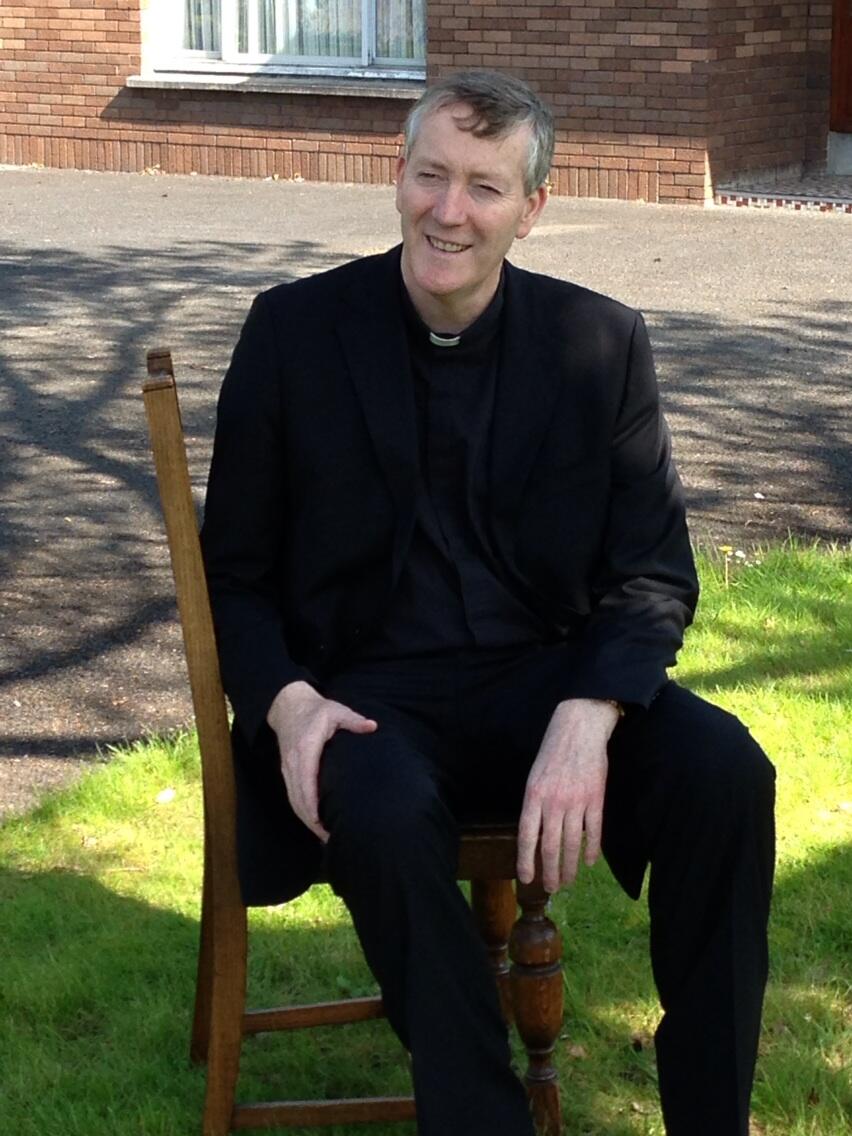
My homily at Masses today. I am posting it for your information and as a record should it be reported on.

Sixth Sunday of Easter

Acts 15:1-2,22-29; Apocalypse 21:10-14, 22-23; John 14:23-29

Our Lord’s words in the Gospel are truly comforting today. As he asks us to keep his word, he promises to send the Advocate – the Holy Spirit, to teach us, guide us and help us. We can then have peace in our hearts for God is with us. With this beautiful teaching Jesus continues his reflection on love. Last week he commanded us to love and offered himself as an example for us, showing us how to love. Today he fleshes out that command and shows how, in practical terms, we show our love for God: by keeping his word – his teachings and commandments. To love as Christians, then, is simple: to love our neighbour as Christ loved us –embracing sacrifice and being concerned for their salvation; and loving God by keeping his word – following his teachings, living his commandments. If we do this, then life is ours. St John of the Cross once said that in the evening of life we will be examined on our love – if we listen intently to the Lord today and do what he says, then we shall pass that exam and enter into life.

Of course as Christians living in the world we know that is not easy, and that is why Jesus speaks of the Holy Spirit and the help he wishes to give us. In our lives we will meet many challenges, and each of these challenges is an opportunity to live what the Lord asks. At times we will have to pay a price to do so – in worldly terms, but in terms of eternity we earn a heavenly reward. We are living through one such challenge at this time: now we find ourselves facing the reality that the direct and intentional killing of a child will be enshrined in the laws of this land.

During the week the draft legislation for the introduction of abortion was published and despite assurances from the government, in reality this legislation is the first step in the introduction of abortion on demand – as inadvertently revealed by two TDs. I would urge you all to read the legislation. But in summary there are many difficulties with this bill not only for unborn children and women in crisis, but also for religious freedom. First of all we need to bear in mind that many legal figures have told us that there is no need for this legislation – clarification of procedures will help protect women in difficult medical situations. Despite what pro-abortion groups claim, abortion is never medically necessary to save a woman’s life. Just a few weeks ago our nation’s doctors confirmed this, and rejected the idea of legislation. Even more recently one third of our psychiatrists issued a joint statement rejecting the idea that abortion was a solution to a pregnant woman contemplating suicide – objective research and experience show that abortion actually increases the risk of suicide. Yet the government, for some reason, has chosen to ignore the advice of the experts in this area. This legislation is not necessary and is not based on legal, medical or psychiatric grounds – it seems to be a purely ideological exercise.

There are other issues. Under this law abortion will be permitted up to birth. All hospitals which deal with obstetrics will have to perform abortion regardless of ethos – in other words this law will force Catholic hospitals and institutions to carry out abortions. Doctors, nurses and midwives may avail of a conscience clause but only if they themselves arrange for others to replace them – that amounts to cooperation in abortion. However administrative and ancillary staff are not covered by the conscience clause, and so they will be forced to cooperate materially with abortion. These are just a few concerns.

This act, it is obvious by reading it, is the first step to more liberal provisions for abortion, as we see happened in Britain and other places. It is obvious too that a Catholic cannot support this legislation and remain in good standing in the Church – to vote for this bill constitutes a grave sin and if not repented may well lead to canonical penalties. In their statement the Bishops have described this bill as "morally unacceptable" and it is.

As a pastor of souls speaking to my brothers and sisters in the Christian faith I want to remind you that as citizens of this republic you have the right to make your views known to your elected representatives. As men and women who believe in the cause of life, for mothers and babies, and learning from medical science that one life need not be destroyed to save another, we acknowledge that there is another way. I would urge you to do what you can for the cause of life so this legislation does not become the law of the land. Let us listen to the Lord’s word on the sanctity of human life, on the little children. Like the Hebrews in the desert, Ireland now faces a choice: life or death. Let us choose life

Friday, May 3, 2013

"Morally Unacceptable"

 
The Bishops have issued their preliminary response to the government's abortion bill.  I am posting it in full for you:
 

Preliminary response by the Catholic Bishops of Ireland to Protection of Life during Pregnancy Bill 2013

The Catholic bishops of Ireland stress once again the importance of continuing to provide a health care service in Ireland which ensures complete respect for the sacredness of the life both of the mother and her unborn baby. The bishops express their appreciation of the work carried out day by day in this ethos by doctors, nurses, midwives and other health personnel. Through Cura, the Church’s crisis pregnancy agency, help is available to any woman facing a crisis pregnancy.
 
The Heads of the Protection of Life during Pregnancy Bill 2013 published by the Government on Wednesday would, if approved, make the direct and intentional killing of unborn children lawful in Ireland. The Bill as outlined represents a dramatic and morally unacceptable change to Irish law and is unnecessary to ensure that women receive the life-saving treatment they need during pregnancy.
 
The Gospel of Life is at the heart of the message of Jesus; the deliberate decision to deprive an innocent human being of life is always morally wrong. We uphold the right to life as the foundation of every other human right. We encourage a deeper understanding of the inviolability of the right to life of both a mother and her unborn child, in all circumstances. Accordingly, at this crucial time, it is essential that all who share these beliefs make them clear to their legislators.
 
The Bill also appears to impose a duty on Catholic hospitals to provide abortions. This would be totally unacceptable and has serious implications for the existing legal and Constitutional arrangements that respect the legitimate autonomy and religious ethos of faith-based institutions. It would also pose serious difficulties for the conscientious beliefs of many citizens.
 
Abortion, in the sense of directly killing the unborn child, is never a remedy for suicidal ideation and therefore should never be cited as a justification for the direct killing of an innocent human being. It is a tragic moment for Irish society when we regard the deliberate destruction of a completely innocent person as an acceptable response to the threat of the preventable death of another person.
 
We invite all who cherish human life to support the Vigil for Life which is taking place in Knock tomorrow. We encourage everyone who can attend the Vigil to do so or to join in prayer with us. Cherish both mother and baby! Choose life!
 
ENDS
 
In related news Cardinal Sean Brady, our Primate, was asked if the bishops would implement canon 915 of the Code of Canon Law should Catholic politicians vote for abortion: his response seems to amount to a "no".  I pass you over to Catholicus for a reflection on that decision.

Fathers of Our Ancient Faith

 
Two of the more obscure of the Apostles, SS Philip and James the Less, whose feast it is today, deserve to be better known and celebrated. 
 
Poor Philip is often portrayed as the one who failed to see the Father in Jesus, yet if he wasn't for his request of Jesus to see the Father, we would not have had that wonderful teaching from the Lord on the Holy Trinity.  Philip preached the Gospel in Greece and Turkey and he was martyred in Hierapolis.  According to the legend he was crucified and as he died he used his cross as a pulpit to continue his preaching - there's determined discipleship for you.  The lesson we learn from this: our sufferings can provide us with opportunities to proclaim the Gospel.  When we proclaim the truth in the midst of our pain we have a credibility that few can ignore.  Remember the example of Blessed John Paul II - his teaching on the dignity of human life was never so eloquent as in his last years when he carried his cross for all to see.
 
James the Less, the son of Alphaeus, was believed to be related to Jesus.  He is said to be the James who was bishop of Jerusalem, presiding over the first Council of the Church which took place there, and the author of the Letter of James in the New Testament, though some scholars dispute this.  In his lifetime he was venerated by Christians and Jews alike for his holiness and austerity of life.  He too was martyred - thrown from the Temple by Pharisees and then stoned to death.  St James teaches us that we need to be wary of our reputation, even it is honestly gained.  Though he was seen to be holy, it did not stop some from killing him - indeed his reputation for holiness may have been enraged his enemies.  James was unconcerned - his focus was Jesus his Lord, and he sought to serve him.
 
The tomb of SS Philip and James is in the Basilica of the Twelve Apostles in Rome.
 

Thursday, May 2, 2013

The Saint For Our Times

St Athanasius image
 
What a week of feasts! And what a feast today - the great Athanasius - the Doctor of Doctors, the defender of Christ's divinity in an age when even many in the Church were tempted over to Arianism.  Talking to a friend last night, Athanasius came up in the conversation: "Ah yes," my friend said, "the Saint for our times."  And indeed he is.  Struggling as we do in this most secular, anti-life age, Great Athanasius is a model of fortitude and a welcome intercessor as we too try to proclaim the truth and suffer for our fidelity.  
 
Athanasius, as you know, endured savage opposition, oppression from the secular rulers of his day and was deprived of his diocese and his home for his preaching.   As with St John Chrysostom after him, the emperor and his allies tried to break Athanasius down, yet they could not for the power of God sustained this humble servant of Christ.  Despite all their efforts Athanasius just kept coming back.
 
There is good news for us in this.  If we abandon ourselves to the power of Christ, if we stay faithful to him and with open hearts be prepared to "endure whatever comes" for love of Christ, then we will ultimately triumph.  That triumph may take some time to come, we may not see it ourselves on this earth, but it will come.  Like Athanasius we must be witnesses to hope and see, even in our suffering and exile, a joy and peace that can fill our hearts and souls.  In the end, God is in charge, we are mere servants.
 
A few thoughts to share with you.  Exile was part of Athanasius' suffering - exile from his dear people.  Exile is an experience many of us may have to face in these difficult times - perhaps not a physical exile, but a psychological one.  What do I mean by that?  I mean that we who seek to be faithful to Christ, to be true to the Gospel of life, may find that we are gradually becoming strangers in our own native land. 
 
Ultimately we must remember that we have no abiding city on this earth.   As the ancient writer Diogenes reminds us even our motherland is a foreign country - we will never fit in - at least we should never fit in.  We are pilgrims here, and though we must do what we can to make this "vale of tears" a better place, and it is the crucible in which we work out our salvation, we are still only passing through.  
 
That said we have a responsibility for our brothers and sister who are here - we must help them on their pilgrim journey, and so our concern for this world is ultimately a concern for our brothers and sisters, their welfare, their salvation.  For them and for God we must preach the Gospel and be servants of the truth.  So, as Christians, while we do not make our home here, we are engaged here for the sake of salvation.
 
St Athanasius reminds us of this too - he was at home in the desert with St Antony and his monks as he was in his native Alexandria. He was concerned about souls, and so should we, even the souls of our enemies.  This helped him to be generous in forgiveness while strident in his preaching and writing.  As we face the present difficulties, we should learn from him.  We do not resign our responsibilities, we do  not turn our backs on the world because our brothers and sisters live in the world, and the world was created by God for us: we may be pilgrims, but the road we walk was laid out by God - it is his footpath, and we need not yield it to God's enemies human or otherwise.
 
And with Athanasius we must pray for those who persecute us.  In my conversation with my friend we reflected on the members of our government - one day they will have to stand before God and answer for what they are doing.  Indeed if they do not repent, they will have a difficult end.  Reading the lives of tyrants is always insightful: many of them had dreadful ends and many of them seemed to have died without repenting of the evil they did.  While we can say to ourselves that they deserved it, if we truly care for the salvation of souls the loss of one soul is a tragedy and we must do what we can to prevent it.  There is no greater sorrow for God than the loss of a soul. 
 
We may not like our legislators very much at the moment, but we must pray for them, and do so generously so they will repent and not be lost.  I remember one day in prayer I was offering the whole pro-life struggle to God and I sensed in my heart that the ones I had to pray for were those who promoted and facilitated abortion - they were the ones at most risk, not the little ones who were killed.   The triumph we seek is salvation.
 
The body of St Athanasius in the Church of St Zaccaria in Venice

Wednesday, May 1, 2013

Christians In The Military

Fr William Doyle,
Jesuit Mystic and Military Chaplain
One of the things Catholics can be most proud of is the heroic ministry of our military chaplains, particularly in times of war.  Many of our priests have been killed on the field of battle as they brought the sacraments and consolation to soldiers as they died.  Indeed Catholic chaplains have been acknowledged by many as being the one who took the greatest risks and were always to be found by their soldiers' sides in the heat of battle.  
 
A number of such chaplains are now on the road to beatification as the Church discerns that they were sanctified through their heroic ministry and laid down their lives out of love for those they served.   Among these we find the Servant of God Fr Vincent Capodanno, and the Servant of God, Fr Emile Kapaun, who was recently honoured by the US government and who may be beatified soon as a miracle has now been attributed to him.  Of our Irish chaplains, Fr Willie Doyle, killed during the First World War, is the most universally honoured and invoked, although, strangely, a Cause has not been opened for him.
 
It seems this admiration of Catholic chaplains, and Christian chaplains, may well become a thing of the past, in the US military anyway, as some who see their ministry as a threat to secular values seem to be having their way in the Pentagon.  According to Fox News, Christians in the military, chaplains among them, are to be prevented from speaking about their faith for fear that they may be proselytising.   Reports say that this will become a crime in the military and those accused of it will find themselves before a court martial.   There is even talk of "treason". 
 
Is it possible that we are going back to the days of Ss Sebastian, George and the other soldier saints who were persecuted and convicted as treasonous simply because they were Christians?  I hope not.  Someone somewhere in the US military must have some common sense; let's hope it will prevail.
 
And let's hope our lot in power do not get to hear of this, they might get some bad ideas, and let's face it, they've had enough of them as it is.

Abortion: The Done Deal

 
It seems the politicians are closing ranks as the attack on the abortion bill begins.  Government is insisting that this bill will not lead to abortion on demand, or as the Taoiseach said, there is no intention to introduce abortion on demand - note the subtlety there!  Pro-abortion TDs, Clare Daly foremost among them, are condemning the bill because it does not go far enough.  I'm sure that just posturing on their part, this bill opens the door - in a few years Planned Parenthood and Marie Stopes will be fully cranked up and working away to these politicians' delight.
 
I have been reading the legislation and it is appalling.  Included in it is an attack on Catholic hospitals.  While the bill recognises the right to conscientious objection for individuals (for now - I see that part being repealed if too many doctors and nurses opt out), it will not permit institutions to object so Catholic hospitals will be forced under this legislation to carry out abortions.  What this government is doing to our schools, it now seeks to do to our hospitals.  I cannot help but think this is part of Labour's plan to cut Christianity out of Irish life.   Given that bishops sit on the boards of our Catholic hospitals, we await a response.
 
Another deeply distressing development is that when a woman seeks an abortion, there need not be an immediate danger to her life.  I see that as meaning that she turns up, says she will kill herself if she can't have an abortion, and so the panel grants her request. 
 
And as expected, there will be no free vote.  All government TDs will have to go against their conscience and vote for the bill.  Speaking as a pastor of souls, the party whip does not serve as a mitigating circumstance when it comes to sin: the TD will bear full responsibility for his or her vote and will have to answer to God for it. 
 
This bill is not only offensive to life, but it is deeply flawed.  Having looked at it I conclude that no Catholic can support it and remain in good standing in the Church.  We priests will have to get advice on this, but I think that Catholic TDs who vote for this bill (and perhaps Catholic ministers who have already voted on it in cabinet) remove themselves from communion with the Church.   An important issue now is: does the Catholic Church in Ireland have the courage to speak the truth in the face of this legislation?

St Joseph The Worker

 
Well, they may be marching up and down Red Square today, but all over the Catholic world we are celebrating the feast of St Joseph the Worker.    Yes, it is probably true that today's feast was meant to distract from socialism's May day, but in reality, it brings us to reflect on work as part of the Christian life. 
 
If we want to truly understand what work is for us as human beings we need not look at Marx, Lenin or Mao, but rather to the humble carpenter who did not need a bloody revolution to draw attention to his ideas, we see them clearly in his witness to service to his family and his God.  In his work St Joseph found his dignity as a human being and as a child of God, he was not mere proletariat, but rather a living soul who helps transform the world through his labour and his vision, a vision which is given by God and one which calls for the creative cooperation of man.  In reality in Marxism man becomes a cog in a system, in Christianity's view of work, as seen in St Joseph's example, man becomes an artist and a saint.  That, I believe, is the difference between Marxist socialism and Christianity.
 
To all our workers, I wish you a happy feast day.  May your patron, St Joseph watch over you.