Pages

Sunday, February 8, 2015

Today A Prayer For The Liberation Of Slaves


If today were not a Sunday we would be celebrating the feast of St Josephine Bakhita. we can however remember her life and ask her intercession. We can also pray for those who, as she did, endure the injustice of slavery. As we all know slavery is as much a reality today as it was in the past, although it is hidden today. Even here in Ireland there are men and women enslaved to others - in the sex industry, in family homes working for little or nothing and held captive by their employers. As we pray for those afflicted we should also keep our eyes open, for all we know someone could be enslaved not very far from us.

Thursday, February 5, 2015

More On Romero


Talking with people in the last couple of days I see some are not happy with the decision to declare Archbishop Oscar Romero a martyr. I think many people in the Church are uneasy and have some doubts as to whether Romero should be advanced towards beatification. Some see this as another ideological decision by Pope Francis. We have all become familiar with the belief that Romero supported Liberation Theology and was killed for his leftist position.

Personally I still need to do some more reading on Romero by someone I would trust, but I am sure now that Romero was not what many in the left have been promoting since the day he was killed. The familiar narrative of Pope St John Paul and Pope Benedict blocking the Cause and Pope Francis lifting all restrictions is not actually accurate. First of all the previous two Popes would not have needed to block a Cause, if they harboured the antagonism they are said to have had there would have been no Cause at all: they would not have allowed it be opened. St John Paul defended Romero, and visited the slain Archbishop's tomb during his trip to El Salvador. Pope Benedict, as acknowledged by Romero's postulator a day or two ago, advanced the Cause, "unblocking" it - the "block" being concerns (prudently arising) that accompanied the Cause thanks to Romero's being adopted as the poster boy of Marxists in Central America. Pope Francis just finds himself issuing the decree of martyrdom after the work mostly carried out under his two predecessors has been completed.

Fr Dwight Longenecker has an interesting article dealing with this and the real Romero which I would encourage you to read. After his investigations he has concluded that the Archbishop was orthodox, one who sought to defend the poor from their oppressors, indeed a man who chose an Opus Dei priest as his spiritual director - hardly leftist.  He did not accept the Marxist narrative that informs, to various degrees, aspects of Liberation Theology, nor did he see violence and revolution as the solutions to the problems his people were facing. He was as critical of the left as he was of the far right. He was also a pious man who sought holiness and knew that it could only be found in his relationship with Christ.

For further reading on this, see Filip Mazurzcak's piece in First Things, hardly a liberal publication. I note with confidence a quotation from Romero quoted by Mazurczak concerning Marxism: "Since Marxist materialism destroys the Church’s transcendent meaning, a Marxist church would be not only self-destructive but senseless." Such a belief would be anathema to Liberation Theologians who see Marx as a new Aristotle to advance the Church's social teaching, as noted by Mazurczak.

The left have hijacked him: does that mean the Church has to relinquish him to an ideology the man himself did not support? The answer I heard from one person recently seemed to suggest we do.  if such is the case, then Pope Benedict made a serious mistake in canonising Hildegarde von Bingen and then declaring her a Doctor of the Church. She had been hijacked by radical feminists, new age practitioners and all sorts of heretical thinkers who have published countless books interpreting her visions and writings in a manner far from orthodox Christianity. However Benedict realised that the Church had to reclaim a woman who had nothing to do with the unorthodox notions that have grown up around her and her works. Her visions are complex, strange even, but she lived in the heart of the Church and her works are not only orthodox and beautiful, but such a marvellous expression of the Church's faith and thought that she is formally acknowledged to be among that elite group of teachers who deserve the title Doctor of the Church. 

Should we not seek to do the same with Archbishop Romero? Present the man as he was and "rehabilitate" him in the minds of those who are suspicious of him? As we do so we have to remind ourselves that it is not just left-wing regimes that are oppressive, right-wing regimes can be just as terrible and godless, and Romero saw that every day in El Salvador. In the Church there should not be left or right, just right or wrong, what is orthodox and true and what is not. In times of great confusion and conflict people can get lost, and I think with the struggle in El Salvador after his martyrdom the real Oscar Romero, the faithful son of the Church, was lost in the haze ideology can produce.  He became for those who wanted to right wrongs by revolution, reinterpreting the Gospel to support their Marxist faith, a handy vehicle to promote their cause and attract more followers. 

Now there has to be clarity. The theologians in the Congregation for the Causes of Saints have spent thirty years investigating this Cause and they have concluded that the poster boy was no Marxist lackey, but a follower of Christ, an orthodox Catholic, a devoted pastor who sought to do what Christ tells us to do: to look after the poor and speak up for those who have no voice, the little ones who are suffering. He was killed because, in the name of Jesus Christ, in persona Christi, he stood up for these little ones: killed in odium fidei - that is martyrdom.

By the way when I speak of reclaiming Archbishop Romero I do not mean that we render his ministry and sacrifice meaningless, neutralise him, make him "safe" so we can swallow him and put his image on a pedestal to catch dust. He is a prophetic figure in the Church, one who challenges us - that is what the Saints are supposed to do; so we are to listen to his voice and learn from his example. In a sense we should always be at least a little uneasy when we encounter the Saints, if we are not then we may well have become complacent and miss the point of their lives and their heroic virtue.

The Venerable Oscar has a message for us today, tomorrow, until the day the Lord comes again. We would do well to take heed of it. May he intercede for all of us and obtain from the Lord the graces we need to live upright and holy lives, serving God and our brothers and sisters, most especially those are most in need. That may require a martyrdom within our hearts: if so, may it happen.


For your reading the CDF's Instruction on Certain Aspects of the Theology of Liberation, written by the then Cardinal Joseph Ratzinger and approved by Pope St John Paul II. Note that Ratzinger points out that "theologies of liberation" would be more correct since there are a number of them, some which are orthodox expressions of the Church's ministry to the poor and others which are not, but rather an expression of Marxist ideology.

Wednesday, February 4, 2015

Rest In Peace


News has come through that the eminent historian Sir Martin Gilbert has died. A sad loss indeed. Sir Martin was one of the foremost historians of the Holocaust, if not the foremost historian. His works are definitive. He has been of great assistance to those defending the Venerable Pope Pius XII and his record protecting the Jews during the war. Sir Martin was not one of those who fell for the myths invented by Hochhuth. Among other notable historical works, he is also known for his multi-volumed biography of Winston Churchill and a major history of Israel. 

Gilbert was a practicing Jew, so let us commend him to the mercy of the Lord, the God of Abraham, Isaac and Jacob, that through the blood of Jesus Christ, he may be gathered in peace to his ancestors.

Baby Paul In Rome


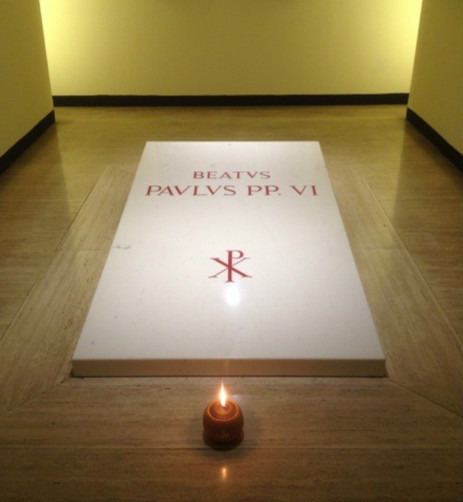
Thanks again to all of you who are praying for Baby Paul: let us continue to ask the Lord for a miracle through the intercession of Blessed Paul VI (see margin left for a prayer of intercession).

This morning Paul is being brought to Rome: his parents are making a pilgrimage to the tomb of Blessed Paul VI over the next few days asking him to obtain the miracle needed so Paul will be born healthy and sound. Please remember him and them most especially over these few days, and let us keep them company, in spirit, in their vigil at the tomb of the holy Pontiff. They will be remembering all of us also in their prayers.

Tuesday, February 3, 2015

He Is A Martyr


It has been announced that the Holy Father has signed a Decree of Martyrdom recognizing that Archbishop Oscar Romero's murder was in odium fidei, in hatred of the faith, thus clearing the way for his beatification. As you know Archbishop Romero's Cause has been a source of controversy for many years given the difficulties in separating religion from politics not only in the motivation for his killing, but also in his ministry. He has been connected with Liberation Theology, a particular form of social justice which has, in part, dabbled in Marxism and even Pelagianism, and has been a thorn in the side of the Church for many years. 

Oscar Romero's concern for the poor, emerging from his Christian faith, cannot be doubt, the problem was to discern whether he embraced the radical forms of Liberation Theology and if he was killed for his politics rather than for his Catholic faith manifested in his defence of the poor and vulnerable. The Congregation for the Causes of Saints and the Holy Father, after many years of study, have concluded that he was killed out of hatred for his Catholic faith and the position of the Catholic Church, which he emulated, to protect and work for the poor. He has become a poster boy for Liberation Theology, including those elements which have more in common with Marx than Christ, but the Archbishop cannot be blamed for that - the investigation into his life had to look at the man and his killers, not those who seek to use him to promote their political agenda.

The Archbishop will be beatified now without the need for a miracle. However, for his canonisation, a miracle would be required and I believe, for the sake of prudence and to ease the anxieties of some, the Holy Father, or his successor, should allow the process to proceed normally: God should be allowed speak. Until he is beatified the Archbishop now holds the title "Venerable".

The body of the Venerable Archbishop Romero moments after this martyrdom

The Venerable Oscar's Cause is not the first to be immersed in politics, many others had to go through a process of careful sifting and intensive study. Though an easier case to examine, the Cause of Blessed Jerzy Popieluszko was one - was he killed out of hatred for the faith or because of his work with Solidarity? After careful study, like Romero, it was because of his Catholic faith and his defence of the rights of men and women which is central to the Church's social teaching. But there are others who Causes should be examined, among them two women who suffered during the Reformation in England - one killed, the other dying in virtual imprisonment after many years of long suffering. I am of course speaking of Mary, Queen of Scots and Katherine of Aragon.

Mary, Queen of Scots: a possible martyr too? 

Mary, Queen of Scots's life is mired in politics, but she was imprisoned by Elizabeth I, not really because she was the Tutor Queen's next heir and caused a problem for her, but rather because Mary was a Catholic and had become a rallying call for suffering Catholics in England. In the end Elizabeth had to have her killed so she could no longer be a threat to her throne. If Mary had been a Protestant she would not have been such a serious threat to the Protestant Queen. I think the Bishops of Scotland should examine the possibility of opening a Cause of martyrdom for Mary. She herself was convince she was dying for her faith, she came to her execution on the 24th July 1567, she wore a red pettycoat as a symbol - those responsible for her death got the message and were none too pleased. Some may cite some irresponsible acts earlier in her life as too serious a barrier to considering a Cause - if that is the case then we had better take St Augustine off the calendar, and whole host of other Saints and martyrs, prominent among them St Andrew Wouters.  

Similarly Katherine of Aragon's Cause should also be considered: her piety cannot be dismissed nor the patience and heroic virtue she seemed have demonstrated in her years of long-suffering at the hands of her unfaithful husband, Henry VIII. As she died she forgave her husband and prayed for him, revealing true, heroic charity. In a sense Oscar Romero's case may well give us the nudge to examine cases we may have put aside because they seemed too complicated to tackle.

Line Up!


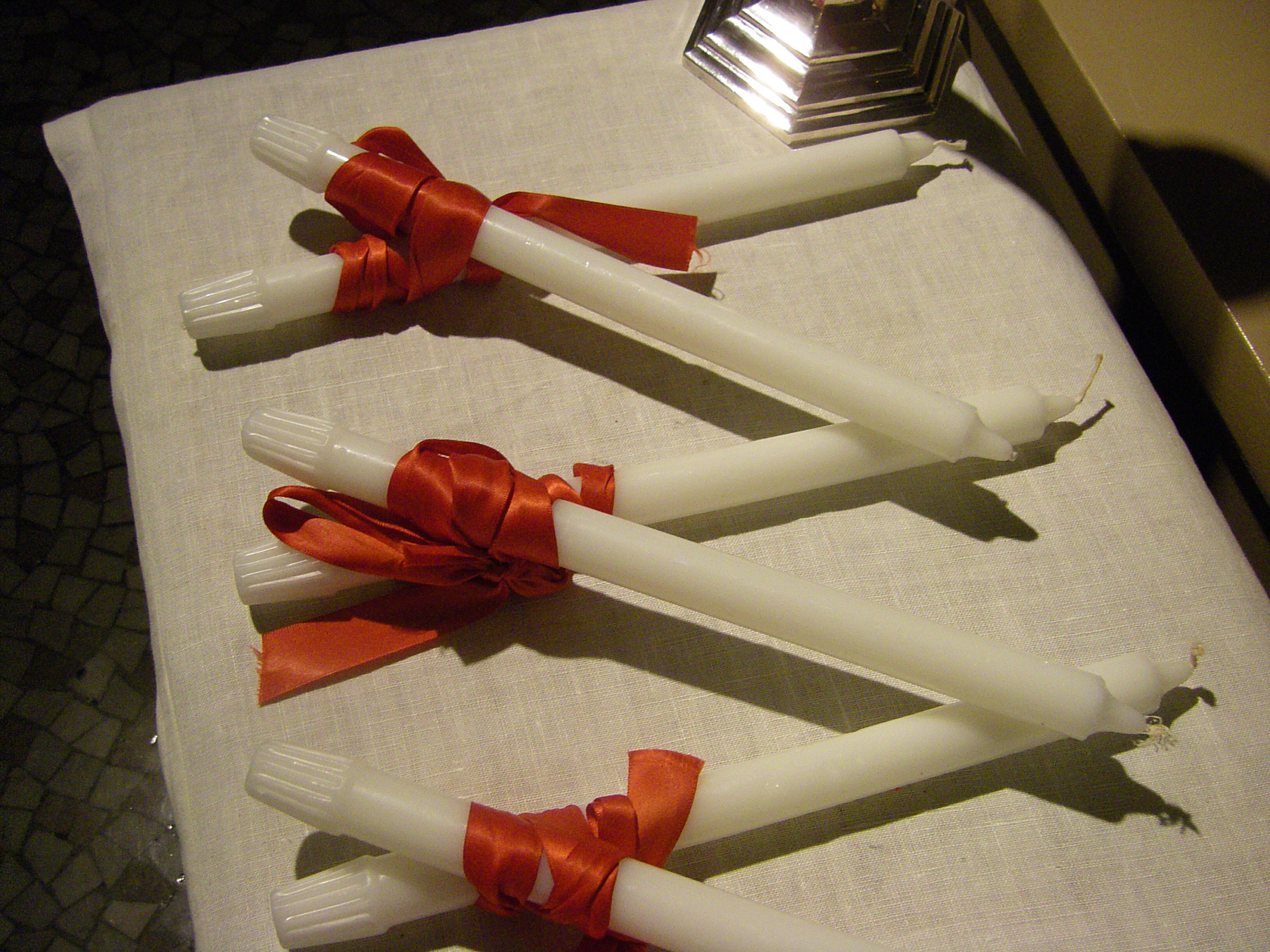
Let's hope we all get out alive this year! No one choked to death because the priest is intense and fervent and unaware, or because he lit the candles (yes, that happened to a priest once!). 

And for your information, the blessing of St Blaise is not confined to his feast day, you can get it any time of year. Note to priests: keep the candles in an accessible place should members of the faithful seek the blessing at other times in the year.

And now some interesting contraptions and variations on the traditional crossed candles with ribbon:


She's not amused, is she?

Any volunteers?


Yum! Lent is coming.....

Monday, February 2, 2015

Squaring The Triangle?


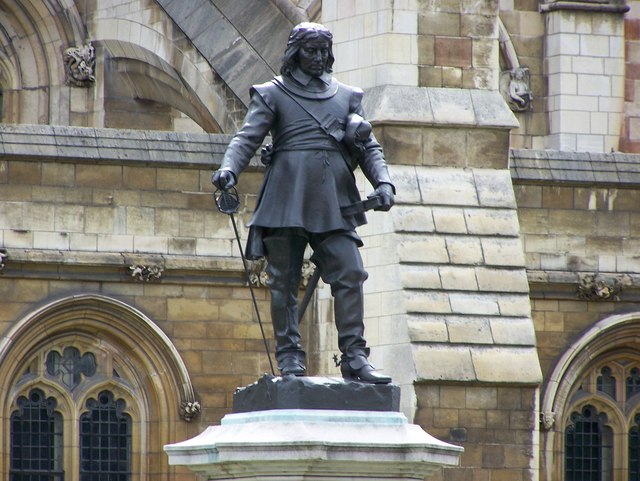
Further to my post earlier today, here is another example of historical revisionism concerning another Cromwell - Oliver Cromwell. This time Drogheda historian Tom Reilly's belief that Cromwell was not as bad as we Irish had painted him and Oliver is now due an apology from the Irish. 

Having served in Drogheda for seven years, I regard it now as my second home, I was aware of Mr Reilly's thesis for some years, the Catholic Herald is considering it now. Not too many Droghedians see things as Reilly does, and the Catholics there, and relations of the priests Cromwell martyred, tend not to have too much patience with the view either.

Anyway, it's out there, at least Mr Reilly is doing his research and arguing from the sources unlike others. He has not won too many to his point of view, and I am not inclined to accept his opinion myself. Every time I pass the Houses of Parliament in London and see the statue of the Scourge himself, mingled feelings of anger and impatience have to be combated with a prayer and an intentional distraction.

 
"Just keep walking, Father...Hold it in now!"

Dismantling The Virtuous


Two English bishops have reacted to the depiction of St Thomas More in BBC's series Wolf Hall, an adaption of author Hilary Mantel's novels Wolf Hall and Bring Up The Bodies, both of which have won the Booker Prize. [See article here] Bishop Mark Davies of Shrewsbury and Bishop Mark O'Toole of Plymouth have severely criticized Mantel and the BBC's depiction of More as a scheming villain, an unenlightened, humourless and severe man: a characterization very much in opposition to contemporary accounts where even his enemies recognized a singular good and learned man.  He is even being portrayed, Bishop O'Toole points out, as anti-woman when in reality he was far advanced in his attitude towards women for this time, making the education of his daughters as much a priority as for his son.

Given that Mantel's books, and the BBC's adaption are centred on Thomas Cromwell and really represent a panegyric for Henry VIII's most loyal and faithful servant in the dissolution of the monasteries and the establishing of his new church, it is probably to be expected that one of the foremost men who stood in the way should be demonized. As you read Mantel's books and watch the series you have to bear in mind that we are not dealing with objective or good history, we are dealing with a particular view which is profoundly anti-Catholic and every event and every character is to be seen in the light of that prejudice, most especially the sainted men and women who could not consent to Henry's schemes. 

In recent years some historians have been looking again at More, and in their revised histories the renaissance man of letters and virtue disappears to be replaced by a bigot who took pleasure in burning heretics. Such an approach to history takes modern attitudes and developments and apply them to the past rather than seeks to study and understand individual figures as they actually were in their own time. When this hermeneutic is adopted you do not discover history or historical figures as was, but rather events and figures distorted by modern prejudice. This hermeneutic does not shed light on past events or people, but rather lionizes the idiosyncrasies of the present. 

As explained in the article, St  Thomas, as Lord Chancellor, did some things we would not have done, or at least we think we would not have done them. One of his duties was to protect the integrity of the state, and according to the law of the time heresy was seen as an action against that integrity (it was not seen then as simply a religious matter) - in the eyes of civil law it created dangerous divisions and corrupted the subjects of the king. It had to be dealt with, and the punishment for those convicted of heresy was a mandatory death sentence. 

The death sentence remains on the statute books of many countries today and, agree with it or not, it is still carried out for crimes considered heinous enough to deserve it. There are good people opposed to it and there are good people who see it as necessary for certain crimes. The Catechism tells us that the state still has the competence to use the death penalty for serious crimes, but given developments in security and incarceration etc, it is probably no longer necessary, but it still leaves the option there. That is what we have come to understand, St Thomas More, as a man of his time, lived in another age with a different understanding.  He did not take pleasure in the execution of heretics - at one point he did say that the state and the people were safer now that a particular individual was gone. And lest we feel we can judge him let us not forget that we live in an age where we are told the mutilation and killing in utero of innocent human beings is not only permitted, but should be a right protected by international and state law: we cannot be throwing stones at anyone in another age. In the sixteenth century a few heretics were burned, today we wade through the blood of tens of millions of children. That is an awful reality many of our contemporaries are quite happy to ignore while trying to silence those who are working to stop it.

There was a time, not that long ago, when people respected others regardless of their point of view. In that age Thomas More was regarded by most people as a man of integrity and conscience and he was respected for it, even by those who disagreed with him. Indeed there are many in Anglicanism who admire him even though he was deeply opposed to the founding of their church because it constituted a break with the Church founded by Christ to facilitate a king who wanted rid of his wife to marry his mistress. Agree or disagree with him on that, he was admired for his commitment to what he believed. Today, however, such a man of integrity is no longer admired. Relativism and secularism have rendered those who stand by their sincerely held faith and views as dangerous, as bigots: integrity is no longer admired because it usually stands in the way of progress.

Thomas Cromwell is now the model, a man who shaped his views and opinions to facilitate the prevailing opinion, he could see when the winds were changing and from where they were blowing at any given time, so he changed too. In that Cromwell may well be a fairly modern figure, but a model? A man to be admired? No. However we can learn one lesson from the life of the real Cromwell - you may twist and turn to keep up with the fickle winds, but one day you will not be quick enough to change and before you have time to squirm the axe will have fallen. St Thomas stood his ground, lost his head but preserved his integrity and, we believe, won the crown of martyrdom and eternal life. Cromwell just lost his head.

The Light To Enlighten The Gentiles


The old priest Simeon holds the Infant in his arms and recognises him.  Overflowing with joy he sings the Nunc Dimittis, for now God has fulfilled his promise and the Light has come into the world. 

We mark this feast with the blessing and lighting of candles, to remind ourselves that Christ is the light of the world, that he casts out the darkness, and now we his disciples are called to take that same light and carry it to every corner of the world.

It is interesting to note that the Paschal Candle is lit over us twice in our lives - at our baptism when we come into the Church, it is burning beside the baptismal font and after we come out of the waters our own baptismal candle is lit from it. The second time is at our funeral, when our lifeless bodies lie before the altar as the Requiem Mass is offered for us. Between these two occasions the light of that Paschal Candle is supposed to burn within us as we live our Christian lives. The candles we carry in procession at today's Mass symbolise then, not just Christ who enlightens us and the world, but that same light burning within us, lit by God, which urges out into the world as witnesses and evangelisers.

Sunday, February 1, 2015

A Prayer To The Spiritual Mother Of Ireland


Today is a Sunday, so in Ireland we can't celebrate the feast of our secondary patron St Brigid. However, we can pray to her and ask her to watch over this little country in which she lived, served God and found holiness.

What would she make of Ireland now? I do not know, but I do not think she would be pleased. Pope Benedict XVI in his Letter to the Irish encouraged us to look to our Irish Saints, to follow their example and ask them to intercede for us. Given what lies ahead later this year we need our countrymen and women in heaven to pray hard for us, foremost among them the patrons of this land. 

Let us ask St Brigid, our spiritual mother, to help us in the months ahead, that as our leaders are desperately trying to tear apart the Christian fabric of our society, we will have the strength to resist and the courage and initiative to rebuild a more just and Christian Ireland for the future. May the holy souls of our Saints come walk among us once more, manifest themselves to rouse the consciences of our people and pastors, and lead us in this difficult times. 

Let us not forget that Ireland belongs to God and his Saints - it was bought with the blood of the Lamb; may Brigid cast her cloak over the whole of this country and reclaim it for Christ.