Pages

Sunday, July 3, 2011

A Miracle For Pope Pius?


A few months ago word leaked out that there was a possible miracle for the Venerable Pope Pius XII - many of us rejoiced because we saw that at last his Cause was proceeding.  Pope Benedict finally declared him Venerable in 2009 after holding off signing the Decree of Heroic Virtue for two years to allow an internal investigation into the controversy over the late Pope's record during World War II.  Thanks to the work of numerous scholars, not least among them the ever faithful Sr Margherita Marchione, and Gary Krupp and the Pave The Way Foundation, there was enough evidence to convince the Holy Father that he could safely proceed with the Decree of Heroic Virtue.

Now details of the alleged miracle are emerging, USA Today has an article with details.  If the article is to be believed, it seems a lady, identified as Maria Esposita was suffering from an aggressive form of cancer.  Praying to Pope Pius XII, the cancer disappeared after one course of chemotherapy leaving no secondaries and no traces.  This is remarkable and may indeed be the result of divine intervention.  However, according to the article, some doctors are not convinced, and though the cancer was aggressive and her doctor, a non believer, recommended prayer for the treatment to be successful, it seems the professional opinion being offered maintains that this cancer could have be treated successfully with one course of chemo. Her bishop, having listened to this opinion, has decided it might not be safe to proceed with this case.

While I love Pope Pius and I look forward to the day of his beatification, I believe the bishop's decision is correct.  With Pius I think we need an iron tight miracle, one that will gobsmack atheists and critics alike.  We cannot allow any doubts to linger over the favour which will be used to raise the Pontiff to the altars. 

We hear too often of the "questionable" miracles surrounding certain saints.  A friend of mine often teases me about the miracle accepted for Blessed Mother Teresa, and of course I always rise to the bait, fool that I am.  But the critics say that the immediate disappearance of an incurable malignant tumour the size of an orange in the stomach of the lady healed could have been due to a pill.  If that is the case we all want that pill because it can do the impossible.  Yet many still question it.  So too with the miracle for the beatification of Blessed John Paul.   The critics in all these cases will never be convinced:  never; they have too much to lose in accepting the veracity of the favour.

Given that Pius has so many critics, among them people who are not interested in the truth, and even those whose organisations and countries did not lift a finger to help the Jewish people during the Holocaust, indeed some even discouraged Pius from speaking out, we should not be giving them any more ammunition.  We should proceed with the Cause and pray fervently for a miracle and when it comes process it without any delay, but there must be prudence.  Those who say "why can't we just wait?" (reminiscent of another recent campaign!) are just trying to buy time in the hope this Pope drops and the glorious liberal revolution begins under a "progressive" pope.   The last thing the Church should do is give them any excuse to preen what's left of their aging feathers.

I do not think the Congregation for the Causes of Saints will accept the favour, I will be surprised if they do.  From what I know, despite the insidious complaints, the CCS is very particular and if there is any doubt they will throw out a miracle - better to be safe than sorry.  I know of a Cause where an almost water-tight favour was submitted, but almost was not enough - there might be a question - it was a slight "might", but it was enough for the favour to be sent back "Return to Sender".  And we should expect nothing less. Yes it is disappointing after all the prayer and the work, but a miracle will come - one which will be enough and the good people in CCS will recognise it when they see it.

So keep praying, good people, and commend the sick to all those Servants of God so the Lord may, through their intercession, pour out his healing grace upon them and give us, the Church on earth, the joy of new Blesseds and Saints.  

Saturday, July 2, 2011

The Heart Of The Mother


Lots of wonderful feasts this weather, and today's is truly fine, and indeed most important for the Fraternity of St Genesius.  Today we celebrate the Feast of the Immaculate Heart of Mary.  In the Fraternity the memoria of the Immaculate Heart was raised by our Protector Bishop to the dignity of a Feast: the Immaculate Heart is the patroness of our family of prayer.  So, to all our members, a very happy feast day!

Our Fraternity is at the service of the Immaculate Heart, we see our mission to be part of her mission of bringing her children to her Son.  Our aim is to pray for souls and to work towards the triumph of the Immaculate Heart - hence the importance of Fatima in the spirituality of the Fraternity.  It was there in June 2006 that the idea was consecrated to her. 

As her children, it is only right to seek to assist her in her mission.  Jesus tells us to love God and love our neighbour, the psalms speak of how good it is for brothers to live in unity - in helping Mary win souls for Christ we fulfil both of these teachings - loving our neighbour by seeking to bring them to God and seeking unity with them in faith and love.  

One of our members in the US, Kevin O'Brien, has come up with an interesting idea - a period of prayer and penance for those we pray for and the mission of the Fraternity in the days which link the two feasts of the Fraternity - the Immaculate Heart and St Genesius on the 25th August.  That's an idea - a spiritual rope linking our two celebrations. 

Some prayers for our celebration today:

Fraternity Consecration
to the Immaculate Heart of Mary

O you, Immaculate Heart of Mary
we consecrate ourselves,
our hearts, minds, wills and lives
and all those works we undertake,
so they may be for the glory of God,
the sake of the Gospel and the salvation of souls.
Holy Mother, our Queen and our Joy
give to our hearts the dimensions of yours
and form us in the image of your Beloved Son


Litany of the Immaculate Heart of Mary
composed by Blessed John Henry Newman

Lord, have mercy.
Christ, have mercy. 
Lord, have mercy.

Christ, hear us.
Christ, graciously hear us.

God the Father of Heaven,
Have mercy on us.
God the Son, redeemer of the world,
Have mercy on us.
God the Holy Spirit,
Have mercy on us.
Holy Trinity, one God,
Have mercy on us.
Heart of Mary, Pray for us.
Heart of Mary, after God’s own Heart, 
Heart of Mary, in union with the Heart of Jesus, 
Heart of Mary, the vessel of the Holy Spirit, .
Heart of Mary, shrine of the Trinity, 
Heart of Mary, home of the Word, 
Heart of Mary, immaculate in your creation, 
Heart of Mary, flooded with grace, 
Heart of Mary, blessed of all hearts, 
Heart of Mary, Throne of glory,
Heart of Mary, Abyss of humbleness,
Heart of Mary, Victim of love, 
Heart of Mary, nailed to the cross,
Heart of Mary, comfort of the sad, 
Heart of Mary, refuge of the sinner,
Heart of Mary, hope of the dying,
Heart of Mary, seat of mercy, 

Lamb of God, who take away the sins of the world,
Spare us, O Lord.
Lamb of God, who take away the sins of the world,
Graciously hear us, O Lord.
Lamb of God, who take away the sins of the world,
Have mercy on us.

Christ, hear us.
Christ, graciously hear us.

Lord, have mercy.  
Christ, have mercy. 
Lord, have mercy.

Immaculate Mary, meek and humble of heart.
Conform our hearts to the heart of Jesus.

Let us pray:
O most Merciful God, Who for the Salvation of Sinners and the Refuge of the Wretched, has made the Immaculate Heart of Mary most like in Tenderness and Pity to the Heart of Jesus, grant that we, who now commemorate her most Sweet and Loving Heart, may by her Merits and Intercession, ever live in the Fellowship of the Hearts of both Mother and Son, through the same Christ Our Lord.
Amen

Friday, July 1, 2011

Sweet Heart of Jesus


There is a wonderful article by Fr Alexander Lucie-Smith in the Catholic Herald Online about today's great Solemnity, well worth a read.    He reminds us that today's feast is truly rich: a celebration of the Incarnation - a "feast of flesh" he calls it, but also a deeply intimate feast, one in which we are called to enter into the Heart of Jesus Christ - the Heart that was opened on the cross for us - opened to release grace out upon us, but opened also to be a door for us to enter into the life of God. 

St Veronica Giuliani

I think of the great Italian mystic, St Veronica Giuliani: when her mother was dying she confided each of her little children to a wound of the Lord - little Ursula, as she was then, was entrusted to the wound in the Lord's side.  It would prove providential - she entered into that wound and into the Heart of Christ to discover and, at the Lord's command, to reveal its secrets for all who seek to come to know and love Christ.

Badge of the Catholic rebellion in the Vendee (1793-1796)

Fr Lucie-Smith also reminds us of the place devotion to the Heart of Jesus has in history.  The martyrs of the French Revolution found strength in the devotion to face their deaths.  The uprising in Vendee (or counterrevolution I suppose) took the devotion as the rallying cry against the strident atheism of the revolutionaries.  The Sacred Heart was depicted on the flags of the Catholic insurgents - in fact the flag and arms of the region still depict the crowned Hearts of Jesus and Mary. 

In these troubled times the Heart of Christ must also be an inspiration, a strength and indeed a rallying call for us - a call to faith, hope and love - to heroic living.  There is a need for a new counterrevolution - a new order to undo the regime imposed by secularism and the promiscuity of the sexual revolution.  Of course that new order is very ancient - it is the way of the Gospel, but it is ever new since it has a relevance for all people in all ages.  The Heart of Jesus puts flesh on the Gospel and reminds us that ultimately the Gospel is Christ's - his word, his teaching, the path which can lead us to his life: the way to his Heart: the way of love.

Wednesday, June 29, 2011

Happy Anniversary, Holy Father!


Today a prayer, and Holy Mass offered for the Holy Father on the 60th Anniversary of his Priestly Ordination. 


and in honour of the occasion, a Papal salute from one of the best living Catholic composers:

Tuesday, June 28, 2011

Who You Know

Fr William Doyle, SJ

A friend of mine, Pat, has a great interest in the life of the Irish Jesuit, Fr Willie Doyle, who died as he heroically served soldiers during World War I (see his blog here).  I was talking about the same priest with other friends of mine yesterday and one of them told me that his grandfather had been a friend of Fr Doyle and they had served together in the war.  It is a small world.

Fr Doyle was one of Ireland's unsung heroes - a typical example of the humble padre out on the frontline bringing comfort and help to the soldiers, Catholic and non-Catholic, in the midst of the horrors of war.  The example priests like these offer is truly amazing, revealing the astounding courage which is one of the graces conferred on a priest in the sacrament of holy orders. 

Among those heroic priest being considered for beatification is Fr Emil Kapaun who died of neglect in a Korean hospital during the Korean war in 1951 - there appears there may be a miracle for him.  Another fine example is the "Grunt Padre" himself, Fr Vincent Capodanno, a native of New York who died in the Vietnamese conflict in 1967.    These priests are not to be seen as men who support war, but rather knowing that human beings are in the middle of life-threatening conflicts, they take the risk to be with them to minister to them and, if it happens, to prepare them for death and be with them when they die.   As Fr Capadanno often said: "I need to be with my men - to say Mass for them" - that sums it up.  That's why Fr Doyle was on the battlefield, and he died carrying out that ministry.

Are such priests martyrs?  Now that is an interesting question.  Martyrdom, defined strictly, is when one willingly accepts death for Christ, the Christian faith, the Church, a teaching or a virtue.   These priests died, not for the faith, but rather in solidarity with those they were ministering to.  I see that both Fr Capodanno and Fr Kapaun's Causes are proceeding on the basis of heroic virtue, and so require miracles for beatification.   Their decision to remain with their troops in the heat of battle at the risk of their lives may not merit to be called martyrdom, but it does reveal heroic virtue. 

There is supposed to be a Cause for Fr Willie Doyle, though I can find no trace of it.  There was certainly great devotion to him in the past, and as my friend Pat points out in a recent blog post, St Josemaria Escriva was influenced by the Irish priest and seems to have used Fr Willie's spirituality and teaching in his own.  So what happened to his Cause - did it start at all?  Well, according to this blog post, it seems it "faded out" in the 1960's.  That would sound right if it is true - we got rid of a lot of things in the 60's including faith and virtue.  Now that we are finally recovering from the hippy madness, might we not try and look at our saints again, Fr Doyle among them? 

And while we are at it (I'm on a roll now, rant coming....) include Nellie Organ of Cork, child mystric of the Eucharist;  Archdeacon Bartholomew Cavanagh, visionary Mary Byrne and Dame Judy Coyne, the "saints" of Knock;  Tom Doyle, the saintly Legion of Mary worker who was renowned for his holiness and service of the poor in Dublin; the priest martyrs of the Columban order; not to mention jump starting the Causes already in progress. Time to get the finger out.  Ireland needs saints, we already have candidates, why ignore them - surely we are not embarrassed by them......or are we?

Possible "Saints" of Knock Shrine.  The visionary Mary Byrne, renowned for her holiness of life, the Parish Priest at the time of the apparitions, Archdeacon Bartholomew Cavanagh; and the great defender of Knock and foundress of the Handmaids of Knock Shrine, Dame Judy Coyne.

Monday, June 27, 2011

The Age of Martyrs

The Servant of God, Fr Christian de Cherge, leader of the "Atlas Martyrs"

There is little doubt that the age of martyrdom has returned to the Church - if it had ever left us.  Apparently every day numerous Catholics, among other Christians are put to death for their Christian faith.  Indeed every day followers of Jesus Christ are persecuted and discriminated against in many countries in the world, including the so called "free nations" of the West.  Secular intolerance and the growing power and influence of militant gay groups ensure that Christians are being denied their basic human rights and are sidelined in countries they have actually built and support. 

Tomorrow evening at our film club we will watch Of Gods and Men, the story of the Cistercian monks put to death for their Catholic faith - men who may be declared martyrs by the Church and beatified at some time in the future (the "Atlas Martyrs").  These holy men made the decision to stay in community and face whatever was to come.  They did not want to abandon the local people whom they loved, many of whom were Muslim, nor renounce their vocation of witnessing to the Gospel through their religious life.  

These martyrs give us all courage.  They also remind us that even in the face of trial and persecution, we must remain firm and trust in the Lord.  Faith, hope and love are all very well when things are great, but when things get tough, that's when we are tested and the Lord wants to see if we will stay faithful to him.  If we do, we will be given the graces we need, and we will be sanctified: remember Saints are heroes.  Like Blessed John Paul II I believe all of us are called to be Saints, and God offers us the means to sanctification every day, we need only say "Yes".

These martyrs, and Saints in general, are our helpers - from heaven they look down with love and seek to help us every step of the way.  The whole concept of the patronages of Saints reveals this truth.  Given recent events in New York and the diabolical attack on the Church from militant gay groups, we need to call upon the Saints who have a special mission to help in this area.  One of these Saints is St Maria Goretti whose feast falls on the 6th July - patron of purity and innocence, she is a tough cookie who can obtain many graces from God for those in need.  The novena in preparation for her feast begins tomorrow, so you might join me in praying for help in these times. 

Powerful with God, a mighty ally: St Maria Goretti:
she may look cute, but she packs a punch!

Novena to St Maria Goretti

Blessed Maria, faithful witness to Christ, patron of purity,
we turn to you now and ask your powerful intercession
as we face the difficulties and temptations of our daily lives.
You offered your whole life in witness to grace,
preferring to die rather than sin.
Help us in these times to witness also to this purity of heart;
defend us in the face of attack by your example and fidelity.
Watch over our Mother the Church, our Holy Father the Pope
and all our priests and religious.
Keep our young people close to your heart and guide them,
through your prayers win them for Christ.
In this novena, we offer you our own prayers __________
and ask you to intercede for them.
Stay close to us, dear sister in Christ, help us to remain faithful,
joyful and pure,
witnesses of hope and light of the world, as Christ our Saviour intends. 
Amen.

Sunday, June 26, 2011

Reforming The Body Of Christ


In Ireland today we celebrate the Solemnity of the Body and Blood of Christ - Corpus Christi.    The feast has added significance this year because we are preparing for the Eucharistic Congress next year, and the Church in Ireland held a mini Congress in Knock.  Having reflected on our martyrs, this feast gains even more significance since many of our martyrs were put to death for their devotion to the Mass - our priestly martyrs in particular.

Interestingly I am also reading Mark Dooley's new book, Why Be A Catholic? - I have to say it is a good read.   Dooley is a philosopher, and has held a number of positions in philosophy departments.  He is an expert on the "philosopher of beauty", Roger Scruton and has written a couple of book about him.  He has also written articles and columns for a number of newspapers, he is currently a columnist for the Irish Daily Mail.  It was in that paper that he exposed the inner life of the national seminary in Maynooth where he was working in the Philosophy Department.  His articles caused a stir, perhaps even a bit of a storm in the seminary.  Strangely, following the publication of the articles his contract with Maynooth was not renewed - a pure coincidence I'm sure.

Dooley's book is, in a sense, a response to his critics, although it was in pipeline long before he wrote the articles, and it is wider in scope.  I mention it today on the Solemnity of Corpus Christi because his writing reveals a real veneration for the Holy Mass and, indeed, a profound understanding of the Eucharist.   Asking the question, How may we reform the Church in these times? He sees the answer in the revitalisation of the liturgy as we see in the present Benedictine reform.  

Dooley points out that we need to come to understand what the liturgy is - that it is not ours but God's.  It is not a place for experimentation, but rather the place where we encounter God and enter more deeply into his life.   Refreshing stuff, but not original, Pope Benedict and many of the new reformers have been saying this for years.   He is correct when he maintains that the renewal of the Church begins with the way we worship because the way we worship reveals what we believe.  When we reorient our worship back to God, we give him precedence, and so we are more inclined to listen to him and more resolved to life lives conformed to his teaching.

At the moment, though many talk about reform, many fall into the trap which swallowed Marx and other ideological thinkers - thinking that reform will emerge from changing structures.  We see so many efforts, so many committees, so many policies and plans from thrusting the burden of the reform onto the laity, to spending thousands of euro on clustering and other such schemes. It will all fail if prayer and adherence to the Gospel are not put on top of the list.   If we look at the history of the Church we see that every reform (EVERY reform) began with personal, spiritual renewal.  

Recovering from the spiritual and religious stagnation of the last forty years will require the same plan.  So what should we do to reform the Church?  Ordain married men???? No.  Ordain women????? No.   Allow contraception and divorce so we can get the people back????  No - those things will only create an even greater rupture from Christ and his teaching.  The reform of the Church will begin when you and I get on our knees before Christ in the Eucharist and make the commitment to become holy.  That's what Dooley says and he is right, hence the importance of today's feast.

Friday, June 24, 2011

More Irish Heroes


After yesterday's post I have been reflecting a little bit more on our Irish martyrs and the times they lived in.  It seems the Church in Ireland in their day was very different to what we have had since Emancipation in 1829.   The Medieval Church was indeed a lively one with great devotions, pageants and saints - this was the case in England and Europe in general - perhaps not so much in Ireland - as far as I am aware we had a more austere Church, but yet there was great faith and we knew how to celebrate - "patterns" - local saints' feast days were known for.   While the beauty of Catholicism in Europe was preserved, thanks to the Reformation we lost our churches, shrines and universities and were forced to go underground where simple, quick ceremonies in rural spots became the norm.  I suppose this changed the Irish spirit against beauty, splendour and ceremony - associating it with our English invaders. It also conditioned the Irish to "quickie Masses".

To appreciate our rich past, though, we can look to our martyrs and their dedication to the Catholic faith, to the Mass, to Our Lady and the Pope.  If I am posting about our martyrs I have to include a member of my own Order - the Servant of God, Br Angelus of St Joseph, Discalced Carmelite, martyred in 1642 at Siddon, Co. Meath, just a few miles from my presbytery here - in the next parish.  He was born George Halley in Herefordshire, England around the year 1622.  He discerned a vocation to the priesthood and religious life and sought to enter the Discalced Carmelites.  He had to come to Ireland to do his studies, to the House of Studies in Drogheda (my former parish).  

He was known as a model student who had a deep regard for the poor.  When Irish insurgents laid siege to the town of Drogheda in 1642, many fled but Angelus stayed to help the people. However he was arrested by Royalist forces and given a prison sentence.  He may have escaped, or served the term which was to be seven months, but he is known to left Drogheda in early August 1642.  He came to the castle in Siddon seeking refuge, however after three days the castle was surrounded by Royalists who were trying to quash rebellion in County Meath.  Angelus, the owner of the castle, a Catholic, Anthony Nugent, and some nuns who were also taking refuge there, were all arrested.  All except Angelus were released - he was well known as a zealous Catholic, and it was for this that he was condemned to death.  On the 15th August he was shot and then run through with a bayonet to finish him off.   His cause is presently being considered in Rome: his beatification will be a moment of great joy for us Discalced Carmelites in Ireland and England, which interestingly is still the one province.  Br Angelus's martyrdom is important in that it reminds us here in Ireland that our martyrs died for their faith and not their being Irish.

That point is important since in Ireland we too often associate Catholicism with Nationalism here - that lethal little cocktail is a product of 19th century Nationalism and came into almost quasi-legal force with the foundation of the Irish state.  In my opinion it has been a curse to the Church in Ireland because it has made the Church almost a department of state and it has, in a sense diluted the reality of the Church's universal nature in the eyes of many here - hence the ease with which some Irish Catholics can adopt a "them and us" attitude to Rome.

One of our martyrs who certainly undermines the Catholic-Nationalist view is the Servant of God, Archbishop Richard Creagh.  Now here is a man of great stature and holiness, with an exciting life and indeed a martyr of importance.  Richard was born in Limerick in 1523.  He came from a family of merchants and so, when he finished his schooling that was the occupation he took up.  He made many voyages to Spain and gained a reputation for honesty.  However God had other plans.  After a successful business trip Richard was due to set sail from Spain on a particular day.  He thought he had time for Mass before the ship left, so he attended Mass in the port church.  However when he came out after Mass had finished he saw his ship already out at sea: he had missed it.  However at that moment a violent gale blew up, struck the ship causing it to founder and killing all on board.  Already reflecting on vocation, Richard saw this as a sign to renounce his merchant life.

He studied in Louvain and was ordained priest, returning to Limerick to minister where he taught for a number of years.  Recognising his abilities, the Papal nuncio recommended him as bishop for the diocese of Limerick: Richard, in his humility turned it down.  He was offered Cashel: again Richard turned it down.  The nuncio was determined, and so when the Archdiocese of Armagh became vacant he nominated Richard again, but this time he persuaded St Pope Pius V to make Richard take it under obedience: Richard had no choice and left Limerick for Rome to be consecrated.  When he returned in 1564 he fell foul of a local leader, Shane O'Neill who, while being Catholic, despised the England.  Richard, who wanted to keep faith and politics separated disagreed and made his loyalty to the crown known.  This infuriated O'Neill who burned down Armagh cathedral as a punishment.

Despite his loyalty, Richard was arrested a number of times - his position and ardent faith did not endear him to reformers.  It was when he was travelling down to Limerick for a visit in 1567 that he was arrested and brought to London where he was imprisoned in the Tower of London.  Put on trial, he was accused of adhering to the authority of the Pope over the Queen's and of supporting the traitor Shane O'Neill (ironic).  His trial dragged on for years, all the while he was languishing in the Tower.  An attempt to undermine his morals was made with a false accusation of sexual abuse made against him by the jailer's daughter.  The accusation was investigated and found to be false.  Left in the prison because the authorities feared the veneration the Irish had for this courageous and holy bishop, he died in the Tower as a result of his sufferings in either late 1586 or early 1587 and was buried inside the walls of the fortress.  His cause is presently being examined, excellent biography here.

In case you are wondering, most of my information comes from a book on the Irish martyrs, Our Martyrs, written by Dennis Murphy, SJ, published in 1896 and recently republished.  Well worth reading.

Thursday, June 23, 2011

The Martyrdom of Ireland

Yesterday I reflected on St John Fisher and St Thomas More, two great English martyrs.  While martyrs belong to the whole Church, offering a universal message of fidelity to Christ, it is good to remember the martyrs of your own land - our own who made the ultimate sacrifice for Christ.

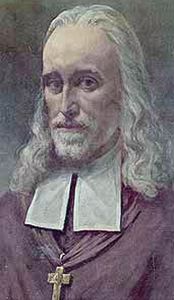
Over the last few days I have been thinking about and reading a little on our Irish martyrs.  Our most famous one is St Oliver Plunkett, a priest of my own diocese who became Archbishop of Armagh and Primate of All Ireland and was canonised in 1975.  He was hanged, drawn and quartered for his faith at Tyburn in London on the 1st July 1681 - he was the last Catholic to be executed for his faith in England (to date).   St Oliver was a remarkable man who suffered much long before he fell into the hands of the authorities.  He must have had a constant headache as he tried to sort out the Church in Ireland and deal with Irish bishops and priests - I'd say physical martyrdom was easy after all that.  He was betrayed by his own - two priests: a Franciscan and a priest of the diocese of  Armagh. 

St Oliver Plunkett

But we have other amazing martyrs.  If I may stay with people from my diocese: Blessed Margaret Bermingham Ball: she was the St Anne Line of Ireland - harbouring and protecting priests; providing Mass for Dubliners in her own home.  A devout and kindly woman who could stand up for herself in any row, she was betrayed by her own son.  Walter had become a Protestant to help his career, when he became Lord Mayor of Dublin he decided to make an example of Catholic Dublin's most frequent offender - his mother.  He had her dragged through the streets to prison, telling her she would get out if she renounced her faith.  He did not know his mother very well - she remained steadfast and died from neglect three years later.  She was beatified in 1992.

Blessed Margaret Bermingham Ball

Other martyrs include the baker Blessed Matthew Lambert and his companions in martyrdom, three sailors, Blessed Robert Meyler, Blessed Edward Cheevers and Blessed Patrick Cavanagh, all from Wexford.  These four were found guilty of helping priests escape from the priest-hunters.  They were simple men who loved God - who would ever have thought that they would become Beati.  Blessed Matthew at his trail could not defend himself against the charges, he said in all his beautiful simplicity that he could not answer the learned arguments, he was just a baker who loved his Church and followed whatever it taught.  As for the Blessed sailors - sailors tend to have an awful reputation - a woman in every port, well Ireland, for all its faults, has three martyr sailors who are the epitome of love of Christ. 

More martyrs for you:  the Servant of God, John Burke whose cause is presently being considered in Rome.  He was another remarkable man who was executed in Limerick in 1606 for his faith.  He was a knight, happily married with several children, a man who was deeply holy - if he had not been martyred there would probably be enough evidence to canonise him for heroic virtue.  He harboured priests and arranged for Mass to be offered secretly in his home.  His reputation, however, reached the ears of the authorities and soldiers were sent to arrest him.  They arrived just as John was helping a priest prepare for Mass.  In the melee that followed John resisted arrest and made an effort to get the priest away.  They made it, but John, on the run, was eventually caught, put on trial and found  guilty.  He was beheaded on the 20th December 1606.

Finally, for today, the holy martyrs of Cashel.  On the 13th September 1647 the Protestant forces of Lord Inchiquin massacred hundreds of innocent Catholics on the Rock of Cashel: it seems that most of them were killed for their Catholic faith.  Unfortunately we know the names of only nine of them and their cause is being processed in Rome.  The nine: Fr Theobald Stapleton, a priest of the diocese of Cashel; a second Fr Theobald Stapleton who was a famous scholar in Europe; another diocesan priest, Fr Thomas Morrissey who was also a Third Order Franciscan; a Dominican priest, Fr Richard Barry; a Franciscan priest, Fr Richard Butler, with a Franciscan Brother, Br James Saul; and a Jesuit priest, Fr William Boyton.  There are also two women: Elizabeth Kearney and Margaret whose surname is unknown. 

These two ladies are most interesting.  Margaret, we might call her Margaret of Cashel, was known to be a devout Dominican tertiary, and having escaped the massacre, she came back to look for survivors and for the body of her spiritual director Fr Richard Barry, OP.  However she was discovered and put to death.  Elizabeth Kearney is already the mother of a saint - her son is Blessed John Kearney, a priest and martyr beatified in 1992.  It seems the apple did not fall far from the tree with Blessed John, his mother was a fine example of Christianity and was willing to lay down her life for her faith.  Hopefully she will join her son among the Beati and then, all going well, we may see mother and son canonised together. That should get the hankies out for the tears of joy.

Rock of Cashel, scene of the martyrdom of hundreds of Irish Catholics

Wednesday, June 22, 2011

Holy Martyrs


Today, as you know, is the feast of St John Fisher and St Thomas More, two of the stars of the English Church.  The story of their lives and martyrdom is well know, so there is no need to relate it, suffice to say that they were among the few who stood up to Henry VIII and perished for their fidelity to Christ. Like many before and after him, Henry could not understand why people would put God before their king or government - he firmly believed that as ruler he represented God and what he said was endorsed by God.  Many today still labour under that illusion.

Many of you will know St Thomas More through the film A Man For All Seasons, based on the play by Robert Bolt.  Both film and play are okay, but they fail to capture the real Thomas More.  As some have said, the Thomas of the film/play dies for conscience and may even have made it his god; the real Thomas More died for Christ and the Catholic Church - his conscience witnessed to these.  Good news, though, if you admire the Thomas More of the film/play, you'll really like the real McCoy: St Thomas was altogether greater personality than Bolt's character.  For one thing he was wittier. 

St John Fisher may seem a more distant figure to some.  He was a very different character to St Thomas.  He was more solemn, less politically astute, but just as holy and learned.  He was a venerable figure who oozed holiness and kindness.  He was prudent and thoughtful, a real academic (he had the biggest personal library in Europe at the time) but he was also a true pastor with a love for the poor.  Imagine a cross between Pope Benedict and Blessed Mother Teresa - that's him. 

St John was the confessor to Katherine of Aragon, so like it or not, he was in the middle of the whole divorce thing.  He recognised that she was true to her husband, unworthy as Henry was, and John remained true to her, guiding her and sustaining her spiritually in her own suffering during the whole affair.  He was tricked by Henry into making what was regarded as a traitorous statement.  He was the only bishop to remain true to the Pope: all the other bishops of England and Wales, when faced with a choice, chose their own heads and the new church Henry was constructing rather than the Pope and the Catholic faith. 

For that very reason I have a statue of St John Fisher on my desk (he's looking at me now!), to remind me that bishops are weak human beings, as we all are, and they need prayer if they are to remain true to God, the Church, the Pope and their duties.  And yes, sometimes it is good to pray that they are not put to the test as some may not have the strength to pass it, and their failure may scandalise the faith of the little ones - we have had personal experience of that in Ireland in recent years.  So, dear readers, pray for your bishop! 

Of course, the feast today reminds us of the challenges we face in these times, and they are not unlike the difficulties St John and St Thomas faced.  Today secular authorities are making unacceptable demands of religious people, asking us to accept and even promote things which are contrary to our faith. The whole gay marriage and adoption thing is one such issue, and it seems it will be the main motivation for the persecution of Christians in the decades to come.   We will need the strength of these two martyrs to overcome.